- Shaft
- Molds&Tools
- Hydraulics And Pump
- Hair transplant needle
- Hydraulics And Pump
- Precision CNC Shaft Machining Manufacturer for High Performance Applications
- Energy Industry CNC Machining Parts Supplier
- Aerospace CNC Machining Parts Manufacturer
- Aerospace CNC Machining Parts Manufacturer
- Automotive & EV CNC Machining Parts Supplier for OEM and Tier 1
- Medical CNC Machining Parts Supplier for Precision Medical Devices
Custom Worm Wheel and Worm Gear Manufacturing Techniques for OEM Supply Chains

Custom Worm Wheel and Worm Gear Manufacturing Techniques for OEM Supply Chains
Custom worm wheel and worm gear assemblies are essential transmission components in equipment that demands controlled speed reduction, high torque multiplication, quiet operation, and reliable motion control. From industrial automation and hydraulic systems to construction machinery and specialized actuators, these components transfer power through a compact right-angle configuration while supporting demanding duty cycles.
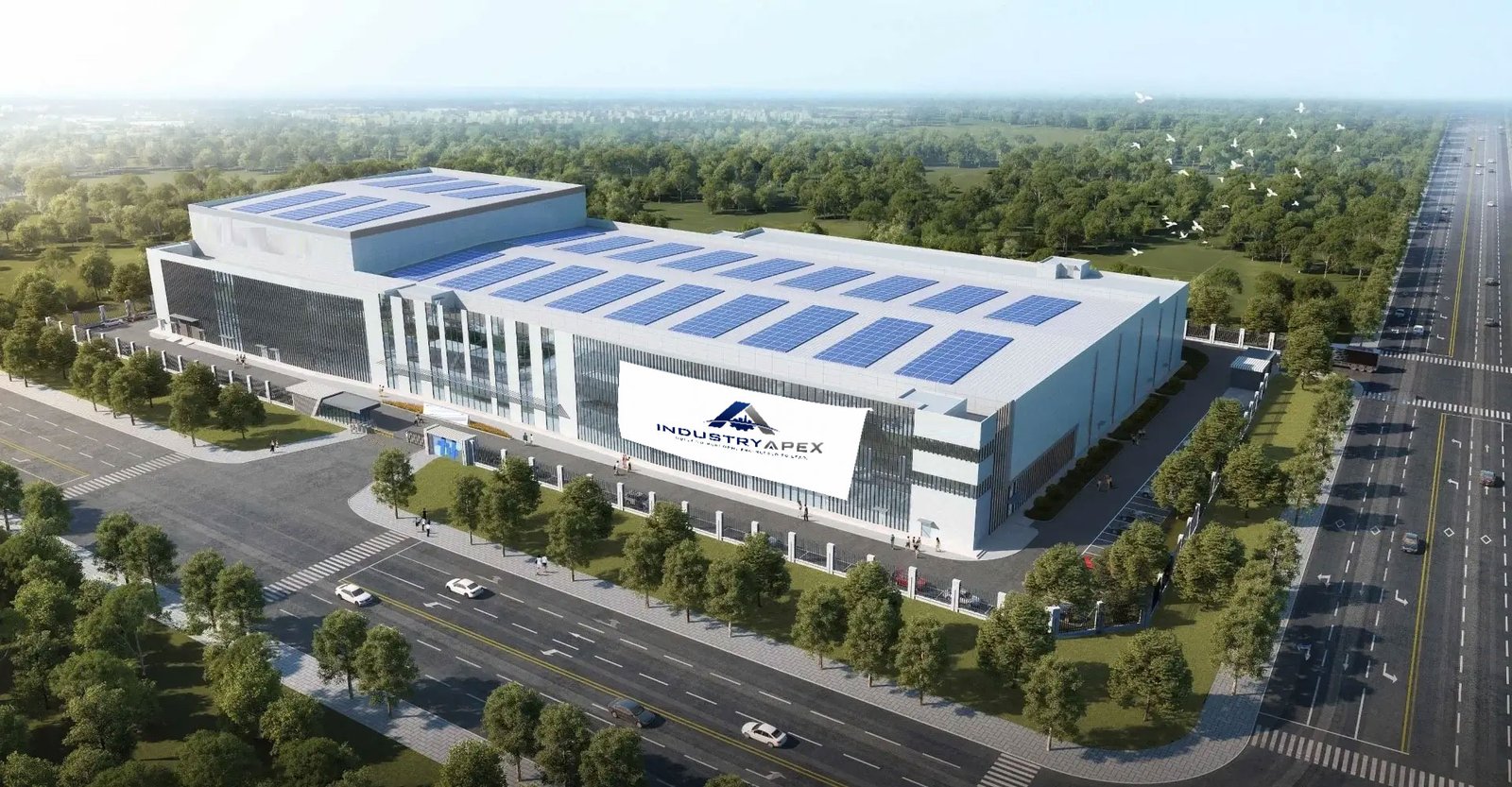
For global OEMs and Tier 1 suppliers, selecting a worm gear manufacturing partner involves more than comparing unit prices. Tooth geometry, material pairing, heat treatment, surface finish, center-distance control, inspection capability, packaging, and production continuity all affect the performance of the final assembly. Dixin Technology, operating through IndustryApex CNC, combines precision machining, engineering development, and supply chain coordination to deliver custom worm wheels and worm gears for application-specific requirements.
1. Executive Summary
Worm gear systems consist primarily of a worm, which resembles a screw, and a worm wheel, which engages with the worm to transmit rotary motion at a right angle. The design can achieve substantial reduction ratios in a compact envelope, and certain configurations provide resistance to back-driving. These advantages make worm drives useful where space, noise, positioning, and controlled movement are important.
However, worm gear performance depends on a closely managed relationship between geometry, materials, lubrication, alignment, and operating conditions. A custom design may require a bronze worm wheel paired with a hardened steel worm, a specialized alloy for elevated temperatures, or a surface treatment that improves wear resistance. Tooth contact must be consistent across the working face, and manufacturing variation must remain within the limits established by the assembly and load calculations.
A capable supplier therefore needs to manage the complete product lifecycle: design review, material sourcing, process planning, machining, heat treatment, grinding, inspection, traceability, and logistics. Dixin Technology provides this integrated approach through a fully controlled precision manufacturing system supported by ERP and more than 30 years of manufacturing experience. Its capabilities include 3- to 5-axis CNC machining, EDM, precision grinding, and industrial ceramics, enabling the company to address both conventional metallic transmission parts and demanding nonstandard designs.
The result is a practical ODM and manufacturing resource for customers that need repeatable custom worm wheel and worm gear production, engineering support, and dependable supply across international programs. Additional precision component capabilities are described on the IndustryApex CNC home page.
2. Technical Deep Dive
Worm wheel and worm geometry
The first manufacturing decision is the definition of the tooth system. Important parameters include module or diametral pitch, number of starts on the worm, tooth count on the wheel, pressure angle, lead angle, pitch diameter, outside diameter, face width, center distance, and backlash. The ratio is influenced by the worm starts and wheel tooth count. For example, a single-start worm engaging a 40-tooth wheel can provide an approximate 40:1 reduction, subject to the selected geometry and operating conditions.
Worm gears are not interchangeable simply because they share a nominal module. The worm and wheel must be designed as a matched pair. Lead variation, flank profile errors, tooth thickness, and center-distance deviation can reduce contact quality and increase friction. During design review, the manufacturer should verify the intended load, speed, duty cycle, lubrication method, allowable temperature, efficiency target, shock loading, and expected service life. These inputs determine whether a conventional cylindrical worm, enveloping worm, or another specialized profile is appropriate.
Material selection and pairing
Material pairing is central to worm drive reliability. A common arrangement uses a hardened alloy steel worm with a bronze worm wheel. Bronze offers favorable sliding behavior and can reduce the risk of adhesive wear when lubrication is correctly managed. Depending on load and application, the wheel may use tin bronze, aluminum bronze, phosphor bronze, or another engineered copper alloy. The worm may be manufactured from carburizing steel, through-hardened alloy steel, stainless steel, or a material selected for corrosion or temperature resistance.
Material selection must consider more than tensile strength. Worm drives generate sliding contact, so wear behavior, friction, thermal conductivity, hardness distribution, and compatibility with the lubricant are equally important. For lower-load applications, engineered polymers or composites may be considered where noise reduction, low mass, or corrosion resistance is more important than maximum torque density. Dixin Technology can also coordinate industrial ceramic components when the application requires electrical insulation, chemical resistance, or specialized wear performance.
Manufacturing the worm
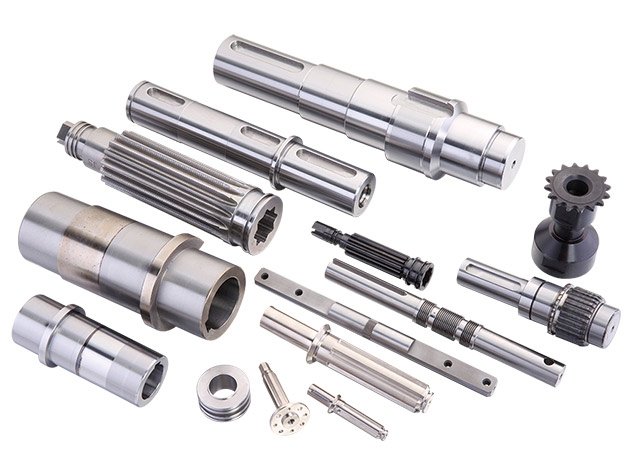
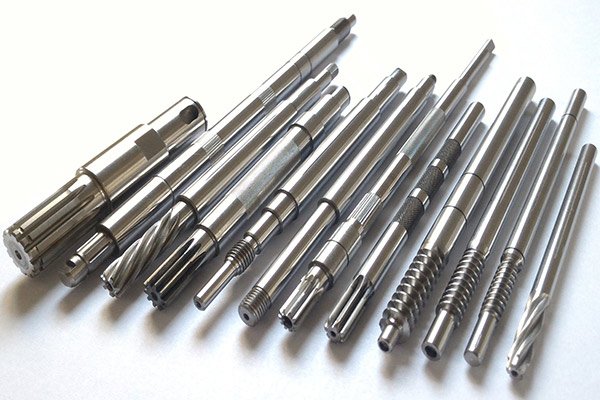
Worms are typically produced through CNC turning, thread milling, worm grinding, or a combination of these processes. The selected method depends on the profile, material condition, accuracy class, production volume, and surface-finish requirement. CNC turning establishes the basic shaft geometry, shoulders, journals, keyways, and reference diameters. Thread or profile generation then produces the working worm surface.
For hardened steel worms, rough machining is commonly completed before heat treatment, with allowance retained for finishing. Carburizing, nitriding, induction hardening, or through-hardening may be selected according to the required case depth, hardness, dimensional stability, and wear resistance. After heat treatment, precision grinding can correct distortion and establish the final flank profile, lead accuracy, pitch diameter, and surface finish. Journal grinding is also important because bearing locations and the worm centerline directly affect assembly alignment.
Where conventional tooling is unsuitable, EDM can support the production of complex features, fine slots, or specialized profiles. EDM is particularly useful when hard materials, tight internal features, or low-force machining conditions are involved. It is generally integrated into a broader process route rather than treated as a standalone solution.
Manufacturing the worm wheel
Worm wheels may be machined from solid stock, produced from a separately manufactured rim and hub, or made using a cast blank that is subsequently turned and cut. The blank preparation process establishes the hub bore, keyway, mounting face, rim diameter, and datum surfaces. For larger wheels, a bolted or shrunk bronze rim can be joined to a steel hub to balance wear performance with structural strength and cost.
Tooth generation is performed using specialized hobbing, milling, shaping, or CNC gear-cutting equipment. The cutter must reproduce the intended worm geometry and maintain the correct relationship between the wheel and worm. Cutting parameters are selected to control burr formation, heat generation, tooth flank condition, and dimensional consistency. Depending on the design, the wheel may receive deburring, lapping, or finishing operations to improve contact behavior.
In low-volume or highly customized programs, flexible CNC machining can be valuable because it reduces dependence on dedicated tooling. In higher-volume programs, purpose-designed cutting tools and optimized fixtures may provide better cycle time and repeatability. A manufacturing partner should be able to evaluate the total production requirement rather than forcing every design into one process route.
Inspection and functional validation
Dimensional inspection should cover the features that determine assembly and load transfer: center distance, bore diameter, shaft journals, keyways, runout, tooth thickness, pitch, lead, profile, face width, and surface finish. Coordinate measuring machines, gear measurement systems, roundness instruments, hardness testers, and optical systems may all be used depending on the component and tolerance level.
Functional validation can include contact-pattern inspection, backlash measurement, torque testing, noise evaluation, temperature monitoring, and endurance testing. Contact marking helps reveal whether the load is distributed across the intended portion of the tooth flank. An uneven pattern may indicate profile error, shaft misalignment, excessive runout, incorrect center distance, or inadequate housing rigidity. These issues are more efficiently resolved during engineering validation than after field deployment.
Documentation is equally important for regulated or safety-critical supply chains. Material certificates, heat-treatment records, inspection reports, process approvals, nonconformance controls, and lot traceability should be retained according to the customer’s quality requirements. A structured ERP system helps connect production orders, materials, routing steps, inspection results, and shipment records.
3. The ODM & Supply Chain Advantage
Many OEM engineering teams have the application requirement but not the internal capacity to develop every transmission component from first principles. An ODM partner can contribute earlier in the product cycle by reviewing drawings, identifying manufacturability risks, recommending material and process alternatives, and helping define a design that meets both performance and supply objectives.
Dixin Technology’s core identity is that of a supply chain integrator and ODM solution provider. This means the company supports more than isolated machining operations. It coordinates engineering decisions, production resources, quality controls, subcontracted specialty processes where appropriate, and delivery requirements within a connected manufacturing structure. Customers can engage the team with a finished drawing, a preliminary model, a sample part, or a functional specification requiring development support.
The manufacturing edge is a fully controlled precision manufacturing system supported by ERP and more than 30 years of experience. ERP-based planning improves visibility across material purchasing, work orders, capacity, inspection status, inventory, and shipping. For global programs, this visibility helps reduce avoidable delays caused by disconnected suppliers, incomplete documentation, or unclear revision control. It also supports repeat orders by preserving the process history and approved production parameters associated with the part.
Dixin Technology’s technical capabilities include 3- to 5-axis CNC machining, EDM, precision grinding, and industrial ceramics. This combination is relevant to worm gear programs because the finished assembly may include turned shafts, machined hubs, hardened and ground worms, precision bores, keyways, custom fixtures, wear-resistant components, and nonmetallic elements. Consolidating these capabilities under a coordinated manufacturing system can reduce handoffs and simplify accountability for the OEM.
For a new project, the supplier should receive the latest drawing or 3D model, required standards, material and hardness specifications, target quantities, forecast information, operating conditions, and inspection expectations. A technical review can then identify tolerance chains, datum problems, tool-access limitations, heat-treatment allowances, and areas where a less expensive process can provide equivalent performance. For strategic programs, early involvement also supports dual-source planning, safety-stock decisions, packaging design, and production ramp-up.
The target audience for this model is global OEM and Tier 1 suppliers that require stable quality, engineering responsiveness, and supply chain continuity. Dixin Technology can support projects across different precision manufacturing sectors, including aerospace CNC machining and structural components, medical components and precision device parts, and hydraulic pump parts.
4. Industry Applications
Custom worm wheel and worm gear assemblies are used wherever compact reduction, controlled movement, and dependable torque transmission are required.
Industrial automation
Automation equipment uses worm drives in rotary positioning units, conveyor mechanisms, indexing systems, lift tables, and actuator assemblies. Low operating noise and compact right-angle packaging are valuable in factory environments where multiple machines operate continuously. The design review should account for frequent starts and stops, reversing loads, positioning accuracy, and heat dissipation.
Construction and agricultural machinery
Construction and agricultural equipment may use worm gear systems in adjustment mechanisms, winches, steering or positioning systems, and auxiliary drives. These applications often involve shock loads, contamination, vibration, and outdoor temperature variation. Material protection, sealing, lubrication retention, and robust shaft and hub design become as important as tooth accuracy.
Hydraulic and fluid-control equipment
Worm mechanisms can support valve actuators, pump accessories, flow-control equipment, and compact drive modules. In these systems, backlash and repeatability may affect valve positioning or control response. Corrosion-resistant materials, controlled surface finishes, and reliable sealing features can be necessary when the equipment operates near water, chemicals, or hydraulic fluids.
Energy and process equipment
Energy systems, packaging lines, food-processing machinery, and process equipment use reduction drives to synchronize motion and maintain controlled output speed. Depending on the environment, the component may require washdown-compatible materials, food-safe lubricants, protective coatings, or special documentation. Engineering collaboration helps balance cleanability, service life, efficiency, and total operating cost.
Specialized and regulated equipment
Medical, laboratory, optical, and aerospace support equipment may require smaller, highly controlled gear sets with strict traceability and repeatability. In these applications, the supplier must understand the complete assembly requirement, including noise, vibration, contamination control, corrosion behavior, and documentation. The same disciplined manufacturing approach used for worm gears can support other custom parts requiring precision grinding, controlled materials, and measured process capability.
5. Call to Action
Choosing the right custom worm wheel and worm gear manufacturer can improve more than component quality. It can reduce design iteration, simplify supplier management, strengthen traceability, and create a more dependable path from prototype to production. Dixin Technology and IndustryApex CNC provide ODM engineering support, precision manufacturing, inspection coordination, and supply chain integration for global OEM and Tier 1 requirements.
Send your drawing, 3D model, sample, performance specification, or production forecast for a technical review. The team can evaluate material pairing, tooth geometry, machining strategy, heat treatment, grinding, inspection, and delivery planning for your application. Contact Dixin Technology to discuss a custom worm wheel and worm gear manufacturing program.