- Shaft
- Molds&Tools
- Hydraulics And Pump
- Hair transplant needle
- Hydraulics And Pump
- Precision CNC Shaft Machining Manufacturer for High Performance Applications
- Energy Industry CNC Machining Parts Supplier
- Aerospace CNC Machining Parts Manufacturer
- Aerospace CNC Machining Parts Manufacturer
- Automotive & EV CNC Machining Parts Supplier for OEM and Tier 1
- Medical CNC Machining Parts Supplier for Precision Medical Devices

Navigating ISO Standards for Medical CNC Machined Parts: Quality, Compliance, and Supply Chain Control

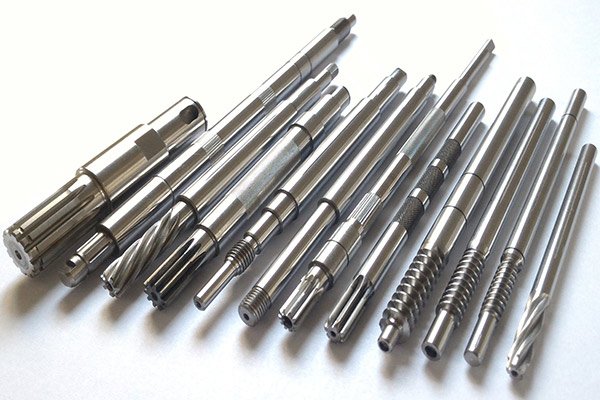
Navigating ISO Standards for Medical CNC Machined Parts
Executive Summary
Medical CNC machined parts sit at the intersection of precision engineering, regulatory discipline, and supply chain reliability. For OEMs and Tier 1 suppliers, ISO standards are not a paperwork exercise; they are the operating language that defines how a component is designed, manufactured, inspected, documented, and released into a high-risk environment. When the part is intended for surgical instruments, implantable systems, diagnostic devices, or fluid handling assemblies, the tolerance window is tight, the traceability burden is high, and the tolerance for variation is low.
For IndustryApex Technology, operating as IndustryApex CNC, the value is not only in machining geometry to specification. The value is in building a controlled manufacturing system that helps customers move from design intent to repeatable production with fewer handoffs and fewer quality gaps. That matters especially when the sourcing strategy depends on consistent conformance across global programs, engineering changes, and regulated shipments.
Understanding ISO requirements for medical CNC machined parts starts with the practical reality that certification alone does not guarantee a compliant part. The manufacturer must also control materials, process stability, metrology, clean handling, documentation, and change management. A supplier that can integrate those requirements into a vertically managed manufacturing flow gives buyers a more dependable route from RFQ to validation and long-term supply.
Technical Deep Dive
ISO standards relevant to medical manufacturing typically shape the quality system around the part, while part-specific expectations come from the application, the device classification, and the customer’s internal controls. In medical CNC machining, the most important operational question is not simply whether a plant is certified, but whether the plant can repeatedly produce parts that satisfy dimensional accuracy, surface integrity, material conformance, cleanliness, and traceability requirements under production pressure.
For machined medical components, the starting point is material control. Titanium, stainless steel, cobalt-chrome, engineering plastics, and specialty alloys each create different machining and verification demands. Medical buyers often require lot-level traceability, material certificates, heat-number tracking, and documented segregation of approved and nonconforming material. A strong ISO-based system ensures these records are captured at receipt, linked through production, and retrievable at shipment.
Precision tolerances are another core issue. Medical parts often include fine bores, thin walls, micro-features, critical fits, and mating interfaces that must remain stable across batches. This is where 3-axis, 4-axis, and 5-axis CNC capability becomes more than a production convenience. Multi-axis machining helps reduce setups, maintain positional accuracy, and protect functional surfaces from cumulative error. For highly complex geometries, EDM and precision grinding provide additional control where conventional milling alone is not enough.
Surface finish and edge condition are equally important. A feature may be dimensionally correct and still fail in use if burrs, tool marks, or surface roughness affect cleaning, wear, sealing, or biocompatibility. In regulated medical programs, the supplier must define how finishing is controlled, how inspection is performed, and how process drift is detected before it reaches the customer.
ISO 13485 is the most recognized quality management framework for medical devices and related components. It emphasizes risk-based thinking, process control, traceability, validated special processes where required, and strong document control. For CNC machined parts, this means every step from incoming inspection to final release should be tied to a repeatable procedure. If the job requires secondary processes such as passivation, polishing, cleaning, or coating, those operations must also be managed with the same discipline.
Cleanliness is a practical production issue, not just a packaging issue. Medical parts may be rejected if they carry residual oils, chips, particulates, or contamination from upstream handling. ISO-driven processes should define cleaning methods, handling controls, visual standards, packaging specifications, and storage conditions. The best suppliers treat cleanliness as a production parameter that must be verified, not assumed.
Inspection strategy deserves special attention. Medical parts often require first article inspection, in-process checks, CMM reporting, optical verification, surface measurement, and final dimensional audits. The inspection plan should align with part criticality. Features that influence safety or performance deserve tighter sampling and clearer measurement methods than noncritical features. If measurement system uncertainty is not understood, the supplier cannot convincingly claim compliance.
Documentation completes the control loop. Certificates of conformity, material certificates, inspection reports, process records, and revision tracking are not administrative extras. They are the evidence package that allows a medical customer to release a part with confidence. In practice, the supplier’s ERP system should connect purchase orders, inventory, manufacturing routing, inspection data, and shipment records so that traceability does not depend on manual reconstruction.
The ODM & Supply Chain Advantage
Medical OEMs and Tier 1 suppliers rarely need a vendor that only machines to print. They need a supply chain integrator that can stabilize sourcing, compress development cycles, and support design-for-manufacturability decisions early enough to matter. This is where an ODM-oriented partner changes the economics of procurement and program execution.
IndustryApex Technology’s core identity as a supply chain integrator and ODM solution provider means the engagement can begin before the part is frozen. Instead of treating machining as a downstream transaction, the company can help customers refine tolerances, simplify manufacturability, consolidate assemblies, and select the most appropriate process route. That is especially valuable in medical programs where component complexity, compliance demands, and release timing all interact.
The manufacturing edge lies in a fully controlled precision manufacturing system supported by ERP and more than 30 years of experience. That combination matters because ISO compliance is only as strong as the underlying operational discipline. ERP-backed routing, inventory visibility, quality records, and production scheduling create a digital backbone that supports traceability and on-time delivery. Experience matters too, because medical sourcing often depends on judgment in areas where the drawing does not answer every question: fixturing strategy, process sequence, inspection gating, and handling requirements.
On the technical side, IndustryApex Technology’s capabilities in 3-axis to 5-axis CNC, EDM, precision grinding, and industrial ceramics broaden the range of medical applications that can be served from one controlled environment. This is useful for devices that combine rigid metal interfaces with wear surfaces, electrical insulation, thermal resistance, or extreme dimensional demands. A vertically capable supplier reduces handoff risk, shortens lead times, and makes the supply chain easier to manage.
For global OEMs and Tier 1 suppliers, the ODM model also improves scalability. Once the manufacturing method is validated, the same partner can support pilot runs, bridge production, and long-term volume with fewer sourcing changes. That continuity lowers the burden on purchasing, quality, and engineering teams, particularly when product families evolve through revision cycles or regional regulatory demands.
In regulated sectors, supply continuity is a technical requirement. A supplier that controls the process from raw material receipt through final inspection can better absorb demand changes, maintain revision discipline, and support formal change management. This is often the difference between a qualified source and a dependable long-term manufacturing partner.
Industry Applications
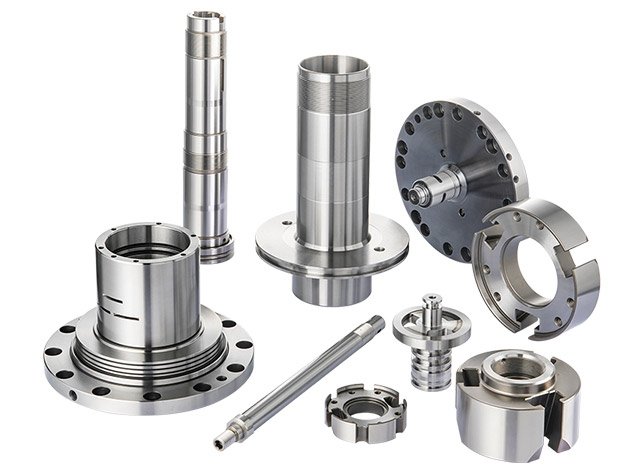
Medical CNC machined parts appear in a wide range of applications, each with different risk and compliance profiles. Surgical instruments require consistent geometry, durable edges, controlled surface finish, and repeatable assembly fit. Implant-related components demand tighter material controls, traceability, and inspection rigor because the consequences of variation are higher. Diagnostic devices and analyzers often need micro-machined frames, brackets, manifolds, connector bodies, and precision mounting structures that must hold alignment through repeated use.
Fluid control assemblies are another major category. Medical pumps, valves, manifolds, and connectors depend on tightly controlled sealing surfaces, bores, and flow paths. In these systems, ISO-focused machining discipline helps reduce leakage risk and improves functional reliability. Buyers evaluating [hydraulic components](https://cnccomponents.industryapex.com/hydraulic-pump-parts/) for adjacent industrial programs often see the same manufacturing principles applied: precision bores, surface integrity, traceable material flow, and controlled inspection.
Across the broader industrial landscape, the same manufacturing infrastructure can also support sectors such as aerospace, where documentation and process control are similarly unforgiving. For teams comparing regulated manufacturing models, it can be useful to review [aerospace CNC machining capabilities](https://cnccomponents.industryapex.com/aerospace-cnc-machining-titanium-aircraft-parts-5-axis-aerospace-parts-aircraft-structural-components/) as a parallel example of how high-mix, high-precision production is managed under strict traceability requirements.
For medical buyers, the practical takeaway is that application fit must drive supplier selection. A competent partner will not just say yes to the print; it will identify where the part demands special controls, where the process could be simplified, and where compliance risk can be reduced without degrading function. That is the difference between filling a purchase order and supporting a device program.
The medical market also benefits from suppliers that understand cross-industry precision logic. Capabilities used in [custom medical components](https://cnccomponents.industryapex.com/iso-certified-cnc-machining-for-medical-components-including-titanium-implants-surgical-instruments-and-high-precision-device-parts/) often translate into better stability for industrial and fluid-control parts, especially when customers need a supplier that can scale from prototypes to qualified production without changing the manufacturing philosophy.
Call to Action
If you are sourcing ISO-sensitive medical CNC machined parts, the right question is not only who can machine the geometry. The real question is who can deliver repeatable compliance, traceability, and supply continuity at production scale. IndustryApex Technology, operating as IndustryApex CNC, is structured to support that requirement with controlled precision manufacturing, ODM collaboration, and a system built for global OEM and Tier 1 supply chains.
To discuss a medical machining program, request engineering input, or evaluate a new component for manufacturability, start with the company’s [home page](https://cnccomponents.industryapex.com/) or go directly to [Contact Us](https://cnccomponents.industryapex.com/contact-us/). If your program spans multiple industries or requires broader sourcing support, the same manufacturing discipline can also be applied across fluid control, aerospace, and other precision sectors.