
- Shaft
- Molds&Tools
- Hydraulics And Pump
- Hair transplant needle
- Hydraulics And Pump
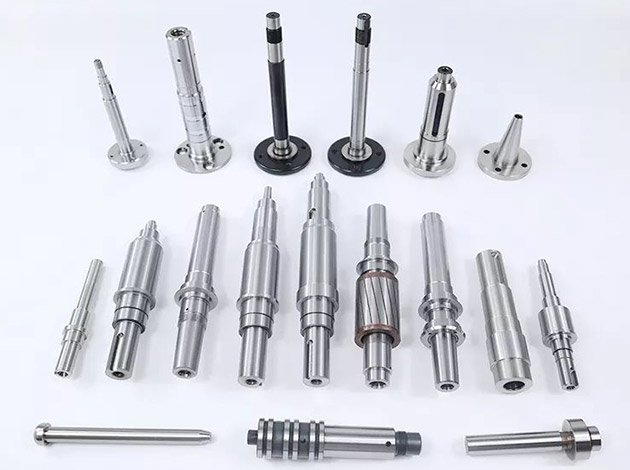
- Precision CNC Shaft Machining Manufacturer for High Performance Applications
- Energy Industry CNC Machining Parts Supplier
- Aerospace Structural Components for OEM Programs
- Aerospace Structural Components for OEM Programs
- Automotive & EV CNC Machining Parts Supplier for OEM and Tier 1
- Medical Device CNC Machining Services
5 Axis CNC Machining for Aerospace Parts Buyer Guide: What OEM Teams Should Evaluate


Selecting a manufacturing partner for 5 axis CNC machining for aerospace parts involves more than comparing hourly rates. Engineering teams responsible for critical aircraft components must evaluate capability depth, process control, material expertise, and quality systems that directly affect part conformance, delivery reliability, and total program cost. This guide provides a structured framework for creating a qualified shortlist and making evidence-based sourcing decisions.
Key focus: This 5 axis CNC machining for aerospace parts buyer guide explains the engineering and sourcing decisions OEM teams should validate before production.
Key answer: When evaluating suppliers for 5 axis CNC machining for aerospace parts, prioritize demonstrated capability with your specific materials (titanium, Inconel, aluminum alloys), documented process control through ERP and inspection records, proven tolerance achievement on complex geometries, batch consistency evidence, and transparent communication on design-for-manufacturing constraints. Request sample inspection reports, ask about machine tool configurations, and verify quality system alignment before issuing RFQs.
Why 5-Axis CNC Machining Is Critical for Aerospace Components
Aerospace parts frequently feature compound curves, angled holes, undercuts, and thin-walled structures that cannot be efficiently produced on 3-axis equipment. 5-axis machining enables continuous tool orientation, reducing setups from four or five operations to one or two. This minimizes accumulated tolerance stack-up, shortens cycle time, and eliminates repositioning errors that compromise dimensional accuracy.
For titanium and Inconel components common in turbine housings, structural brackets, and actuation systems, fewer setups also reduce heat-affected zones and work hardening from repeated clamping. The ability to maintain optimal cutting angles throughout complex tool paths improves surface finish and extends tool life when machining these difficult materials.
Core Evaluation Criteria for 5 Axis CNC Machining for Aerospace Parts
Machine Tool Configuration and Capability
Not all 5-axis machines deliver equivalent results. Trunnion-style configurations offer higher rigidity for heavy cuts in large structural components, while swivel-head designs provide better access for smaller, intricate parts. According to 5-Axis Intelligence, machine selection must align with part envelope, material removal rates, and required surface finish.
Ask potential suppliers:
- What spindle speeds and torque ranges are available for your material?
- What is the practical working envelope after accounting for fixture and tool clearance?
- How is thermal stability managed during long machining cycles?
- What tool holder systems and cutting strategies are used for titanium or Inconel?
Material Expertise and Cutting Parameters
Aerospace materials demand process knowledge beyond standard aluminum machining. Titanium alloys like Ti-6Al-4V require controlled cutting speeds to prevent work hardening and galling. Inconel 718 generates extreme heat and rapid tool wear, necessitating specialized coated tooling and coolant strategies.
Request evidence of prior work in your material. Sample parts, material certifications, and completed inspection reports provide more insight than capability statements. Suppliers experienced in aerospace typically maintain material-specific cutting libraries and documented process parameters.
Process Control and Traceability
Aerospace supply chains require traceability from raw material receipt through final inspection. ERP-controlled manufacturing systems track batch identity, machine assignments, tool changes, and inspection results. This infrastructure supports corrective action, root cause analysis, and audit response.
Integrated manufacturing systems also enable stable batch consistency—critical when qualifying parts for production. Ask how the supplier manages process documentation, revision control, and non-conformance tracking.

Quality System Alignment and Inspection Capability
Aerospace components often require dimensional verification beyond what standard CMM inspection provides. Complex free-form surfaces may need optical scanning or laser verification. Internal features such as coolant passages or lightening pockets require specialized inspection techniques.
Evaluate the supplier’s inspection equipment and methodology:
- What dimensional measurement tools are available (CMM, optical comparators, laser scanners)?
- How are tight tolerances verified and documented (±0.005 mm or tighter)?
- What first-article inspection (FAI) process is followed?
- Are inspection reports generated in AS9102 format or equivalent?
Request sample inspection reports from similar parts. These reveal how thoroughly dimensions are checked, whether statistical process control is applied, and how clearly results are communicated.
Supplier Qualification Framework
| Evaluation Area | Key Evidence | Red Flags |
|---|---|---|
| Technical Capability | Sample parts in your material, documented tolerances achieved, machine specifications | Generic capability claims without supporting evidence, no prior aerospace work |
| Process Control | ERP system with traceability, documented work instructions, revision management | Manual job tracking, no clear process documentation, inconsistent communication |
| Quality Systems | ISO compliance, FAI procedures, inspection equipment list, sample reports | Vague quality references, no inspection documentation, resistance to providing reports |
| Communication | Proactive DFM feedback, clear technical questions, transparent lead time estimates | Passive order-taking, no technical engagement, unrealistic promises |
Cost Structure and Pricing Transparency
According to industry pricing data, 5-axis CNC hourly rates in the US range from $75 to $300 per hour depending on complexity, certifications, and material. Setup and programming costs often exceed machining time for low-volume aerospace parts, making batch size a significant cost driver.
Request itemized quotes that separate setup, programming, machining time, material, and inspection. This transparency allows you to evaluate cost structure and identify optimization opportunities. Suppliers who provide only lump-sum quotes make it difficult to understand cost drivers or negotiate effectively.
Design for Manufacturability and Engineering Support
Capable suppliers provide DFM feedback during quoting, identifying tolerance stack-ups, difficult-to-inspect features, or geometries that will drive cost. For thin-wall aerospace components, early collaboration on fixture strategy, machining sequence, and inspection approach prevents costly design changes after tooling investment.
Evaluate technical communication during the RFQ phase. Suppliers who ask clarifying questions about material specifications, surface finish intent, or tolerance zones demonstrate process understanding. Passive acceptance of drawings without technical engagement often signals gaps in capability or experience.
Practical Supplier Evaluation Checklist
- Request sample parts or case studies in titanium, Inconel, or your target material
- Ask for machine tool specifications including spindle power, working envelope, and thermal management
- Review sample inspection reports (FAI or in-process) to assess measurement thoroughness
- Verify ERP or MES system for job tracking, traceability, and revision control
- Assess quality system documentation (ISO certificates, audit readiness, corrective action procedures)
- Evaluate technical communication quality during RFQ: DFM feedback, clarifying questions, realistic lead times
- Compare itemized quotes to understand cost structure and identify optimization opportunities
- Confirm fixture and tooling strategy for your part geometry and required tolerances
- Request references or contact information for similar aerospace projects
When to Engage for Prototyping vs. Production
Prototype and production requirements differ significantly. Prototype suppliers prioritize speed and flexibility, often accepting less-than-optimal designs to meet aggressive timelines. Production suppliers focus on process optimization, fixture investment, and batch consistency.
If your program will transition from prototype to production, clarify the supplier’s capability in both modes. Integrated manufacturing partners who manage both phases reduce transition risk and preserve design intent through the qualification process.
Frequently Asked Questions
What qualifications should a 5 axis CNC machining supplier for aerospace parts have?
Look for ISO 9001 compliance as a baseline, with ISO 13485 for medical-aerospace crossover parts. More important than certifications is demonstrated capability: sample parts in your materials, documented tolerance achievement, and robust inspection procedures. Verify ERP-based traceability, first-article inspection processes, and quality system maturity through audit or reference checks. AS9100 certification is valuable but not universal among capable suppliers, especially for Tier 2 and ODM partners serving global OEMs.
How do I evaluate a supplier’s capability with titanium or Inconel for aerospace components?
Request sample parts or detailed case studies showing completed work in Ti-6Al-4V, Inconel 718, or your specific alloy. Review tooling strategies, cutting parameters, and achieved surface finishes. Ask about tool life data, cycle time optimization, and how they manage heat generation and work hardening. Capable suppliers will discuss coolant strategies, tool coatings, and adaptive machining techniques. Request material certifications and inspection reports from prior aerospace projects to verify process control and dimensional consistency.
What should I look for in a 5-axis CNC machining quote for aerospace parts?
Itemized quotes separating setup, programming, machining time, material, and inspection provide the most value. Understand how fixture costs are allocated and whether tooling investments are amortized or charged separately. For complex aerospace geometries, programming time often exceeds machining time on first articles. Ask about batch cost reduction, how design changes affect pricing, and whether the supplier offers DFM feedback to optimize cost without compromising function. Transparent cost structure enables better negotiation and design optimization.
How important is machine configuration for 5-axis aerospace machining?
Machine configuration directly affects what geometries can be produced and at what cost. Trunnion-style machines offer higher rigidity for heavy titanium or Inconel components but limit part size due to table rotation. Swivel-head designs provide better access for smaller intricate parts and larger working envelopes. Hybrid configurations balance these tradeoffs. Match the supplier’s equipment to your part envelope, material removal rates, and required surface finish. Also consider spindle speed range, tool magazine capacity, and probing systems for in-process verification.
What inspection documentation should I expect for aerospace 5-axis machined parts?
First-article inspection reports should document all critical dimensions, GD&T callouts, surface finish measurements, and material certifications. AS9102 format is standard in aerospace but not required if the report is thorough and traceable. Request CMM data files, not just summary reports, so your quality team can verify measurement approach. For complex surfaces, expect optical scan data or laser verification results. Batch production should include in-process inspection records and statistical process control charts for key dimensions. Clear, complete documentation accelerates your internal approval process.
When should I source 5-axis CNC machining domestically vs. offshore for aerospace parts?
Domestic sourcing reduces lead time, simplifies communication, and eases audit logistics but typically costs more per hour. Offshore ODM partners offer cost advantages for production volumes and can provide engineering support, material procurement, and integrated supply chain management. For ITAR-controlled components, domestic sourcing may be required. For commercial aerospace parts without export restrictions, qualified offshore suppliers deliver cost-effective, scalable production with proper quality systems and traceability. Evaluate total program cost including logistics, inventory carrying cost, and risk mitigation, not just piece price.
Making the Sourcing Decision
Effective sourcing for 5 axis CNC machining for aerospace parts balances technical capability, process control, cost structure, and supply chain fit. Begin with a clear understanding of your material, tolerance, volume, and timeline requirements. Use the evaluation framework and checklist in this guide to create a qualified shortlist, then request detailed quotes and sample work to verify capability.
For complex aerospace programs requiring scalable production, consider integrated ODM partners who manage engineering, material sourcing, machining, inspection, and logistics as a complete solution. This approach reduces coordination overhead and accelerates time to market while maintaining quality and traceability.
If you are evaluating suppliers for a current aerospace project, upload your technical drawings for a detailed capability assessment and quote.
Sources
- 5-Axis CNC & Automation Buyer’s Guide – 5-Axis Intelligence
- 5-Axis CNC Machining Hourly Rates: 2026 US Pricing Guide – Precision AM
- CNC Machining Guide – PartsBadger