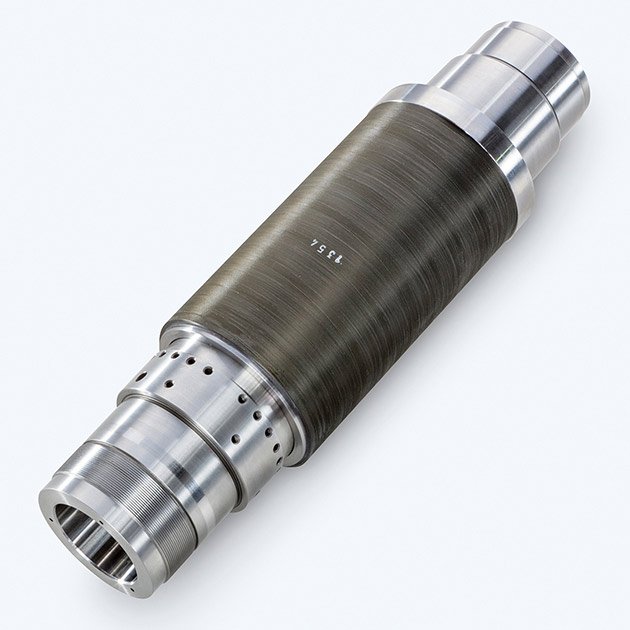
- Shaft
- Molds&Tools
- Hydraulics And Pump
- Hair transplant needle
- Hydraulics And Pump
- Precision CNC Shaft Machining Manufacturer for High Performance Applications
- Energy Industry CNC Machining Parts Supplier
- Aerospace Structural Components for OEM Programs
- Aerospace Structural Components for OEM Programs
- Automotive & EV CNC Machining Parts Supplier for OEM and Tier 1
- Medical Device CNC Machining Services
Mill Turn Complex Parts Buyer Guide: What OEM Teams Should Evaluate


Key answer: A mill turn complex parts buyer guide helps OEM and procurement teams evaluate suppliers on setup consolidation, tolerance stack capability, material handling, inspection discipline, and cost-per-setup efficiency. The right partner combines one-setup capability with proven aerospace/medical experience and ERP-controlled batch consistency.
Why Mill Turn Complex Parts Matter in OEM Supply Chains
Mill turn machining—combining turning and milling in a single setup—has become critical for OEM teams managing cost, lead time, and quality risk. Complex parts that require both cylindrical and prismatic features no longer justify separate operations, secondary fixtures, or multiple suppliers. For aerospace, medical device, and automotive tier 1 manufacturers, a capable mill turn supplier can cut fixture costs, eliminate datum shift errors, and improve part repeatability.
Yet choosing the right mill turn complex parts supplier is not straightforward. Capability spans from basic turning shops adding milling attachments to true multi-axis facilities with synchronized spindle control. Your evaluation criteria must reflect your specific part geometry, tolerance stack, and volume roadmap.
Understanding Mill Turn vs. Turn Mill Terminology and Process Choice
The terms mill turn and turn mill describe the same family of integrated machining but often signal different machine architectures and part strategies:
- Turn-Mill (synchronized spindle): The main spindle rotates the part while a live tooling turret performs milling, drilling, and boring operations. This design is ideal for concentric features, cross-drilled holes, and radial slots on cylindrical bodies. Accuracy depends on spindle runout and turret offset calibration.
- Mill Turn (gantry or table): The part may be repositioned in a secondary fixture or rotary table, with separate turning and milling sequences. This adds handling steps but can offer flexibility for non-concentric geometry.
For most OEM complex parts—especially those with cross drilled holes, concentric bores, or radial features—a true turn-mill with live tooling and synchronized spindle is the efficiency target. Verify that your candidate supplier operates equipment designed for this, not a manual turret retrofit.
Core Evaluation Criteria for Mill Turn Complex Parts Suppliers
1. One Setup Capability and Fixture Design
The primary advantage of mill turn is completing most or all features in a single setup. Ask each candidate:
- Can your equipment hold the part once and deliver all turning, boring, milling, and drilling operations?
- What is your maximum swing diameter and spindle-to-turret distance? (This directly limits part envelope.)
- How do you manage tolerance stack when features are cut in a single setup versus repositioned?
Suppliers with weak fixture design will still need secondary operations or manual setup corrections, eroding your cost advantage. Request witness parts or process documentation showing one-setup capability on geometry similar to your own.
2. Tolerance Stack and Concentricity Control
Mill turn excel at concentric features because the part rotates around a fixed axis. However, tolerance stacking across turning, boring, and milling operations requires disciplined programming and machine calibration. When evaluating suppliers:
- Ask for SPC data on bore runout and radial feature position for similar parts.
- Confirm they use datum management software to track tolerance buildup across operations.
- Request CMM reports showing trend data, not just pass/fail lots.
- Verify that live tooling offsets are re-calibrated per shift or part lot, not assumed from initial setup.
Suppliers using ERP-controlled precision manufacturing systems typically maintain tighter tolerance predictability across batch runs than job shops relying on manual inspection.
3. Material Handling and Hard/Brittle Material Experience
Mill turn shops often specialize in soft metals (aluminum, low-carbon steel). If your complex parts include titanium, stainless, or exotic alloys—common in aerospace and medical—ask directly:
- What is your experience with work-hardening materials like 6Al-4V or 316L stainless?
- Do you optimize feeds and speeds to minimize heat buildup and tool wear in live tooling operations?
- Can you document chip control and coolant strategy for high-speed milling on your turn-mill?
Poor material handling shows up as higher scrap rates, dimensional drift mid-batch, and surface finish variation—all costly in aerospace and medical supply chains.
4. Inspection and Traceability
For OEM and tier 1 procurement, inspection discipline is non-negotiable. Evaluate suppliers on:
- First-piece inspection: Witness the CMM run before production lot release. Insist on full geometric tolerance reporting, not summary pass/fail.
- In-process SPC: Do they measure on-machine during production, or only at batch end?
- Documentation: Digital traveler, electronic SPC upload, and traceability to serial lot and pallet.
- Certifications: Ask for ISO 9001 scope, not just certificate date. Confirm mill turn is explicitly included in their quality system audit.
Supplier Shortlist Comparison Framework
Use this structured approach to narrow your candidate list and compare technical and commercial fit:
| Evaluation Factor | Questions to Ask | Red Flag / Green Signal |
|---|---|---|
| Equipment capability | Spindle-to-turret distance, max swing, axis count, live tooling options | Red: Vague specs or “we can figure it out.” Green: Detailed machine specs and witness parts on file. |
| Tolerance delivery | SPC data on concentric features, runout control, calibration frequency | Red: Only worst-case tolerances stated. Green: Capability study with Cpk ≥1.33 for critical features. |
| Material experience | Portfolio with your alloys, documented tool life, chip control method | Red: “We machine everything the same way.” Green: Material-specific feeds, speeds, and coolant data. |
| Inspection rigor | First-piece protocol, in-process SPC, traceability system | Red: Manual inspection, no electronic record. Green: CMM + SPC + digital traveler for every lot. |
| Volume and scaling | Current utilization, lead time for your planned volume, setup efficiency | Red: Long lead times or capacity uncertainty. Green: Stable lead time and documented setup-to-piece-time ratio. |
| Quality system integration | ISO 9001 scope, ERP/MES capability, integration with your systems | Red: No ERP or manual data entry. Green: Automated data flow, EDI ready, audit-ready records. |

Technical Specification Checklist for Your RFQ
Before issuing an RFQ, prepare your specification with these elements:
- Part geometry sketch: Show all turning, boring, milling, and drilling operations. Highlight concentric features and radial datums.
- Tolerance stack breakdown: List GD&T on each feature. Specify which features must be held in one setup and which can be secondary ops.
- Material and hardness: Alloy, condition, and any heat treat. If post-machining heat treat is planned, state it.
- Volume roadmap: First-article quantity, production volume, and ramp timeline. Suppliers will size equipment and capacity planning accordingly.
- Quality requirements: Inspection points, SPC reporting frequency, first-article inspection scope, and any customer-specific audit needs.
- Lead time targets: State your required dock date. Mill turn shops with good fixture design can often beat generic CNC lead times if given clear requirements.
Cost and Lead Time Drivers
Mill turn complex parts pricing and delivery depend on fixture complexity and setup optimization. Work with suppliers to understand:
- Fixture cost: One-setup fixturing is an upfront investment. Amortize it over your planned volume to see true per-part cost.
- Setup time: A well-designed fixture and CNC program can reduce setup-to-first-piece from hours to minutes. Request documented setup times for your part family.
- Secondary operations: If 95% of features fit one setup but one cross-drilled hole or thread still requires a secondary op, that step adds lead time and cost. Design to minimize secondary operations.
- Batch size economics: Small batches (10–50 parts) carry higher per-part overhead. Larger batches (500+) allow suppliers to spread fixture cost and optimize tooling.
Qualifying Aerospace, Medical, and Automotive Supplier Tiers
If your OEM programs are aerospace, medical device, or automotive tier 1, your mill turn supplier must demonstrate more than generic CNC capability:
- Aerospace: Look for documented experience with 6Al-4V, Inconel, and exotic stainless. Request AS9100 certification or equivalent AS9100 scope within ISO 9001 audit.
- Medical: Confirm ISO 13485 or medical device quality system experience. Verify that concentric bore and surface finish specs are documented in past projects.
- Automotive: Ask for IATF 16949 certification and experience with high-volume ramps. Verify SPC discipline and reaction to out-of-control signals.
Suppliers with genuine vertical expertise in your industry will have learned material handling, tolerance control, and documentation nuances that generic shops discover only through trial and error.
Frequently Asked Questions
What is the difference between a mill turn and a traditional CNC lathe with milling attachment?
A true turn-mill has synchronized main and sub-spindles or live tooling with high rigidity and coordinated motion. A milling attachment on a lathe is a retrofit that adds some milling capability but sacrifices accuracy and speed because the attachment is not factory-integrated. For complex parts with tight tolerance stacks, avoid lathe attachments; specify purpose-built turn-mill equipment.
How do I know if my complex parts are suitable for one-setup mill turn machining?
Parts are well-suited for mill turn if they have a primary rotational axis (turned diameter), concentric bores or through-holes, radial slots or pockets, or chamfers and threads—all on the same centerline. If your part has non-concentric features or extreme length-to-diameter ratios, secondary operations may still be necessary. Share a drawing with your candidate suppliers; they can advise on feasibility within one setup.
What tolerance can I expect on cross-drilled holes in a mill turn one-setup part?
Cross-drilled hole position and runout depend on spindle accuracy, fixture repeatability, and drill deflection. Modern turn-mills typically hold ±0.005 in. (0.127 mm) on hole position and <0.003 in. runout on concentric bores, but this varies by spindle runout and tooling. Ask your supplier for SPC data on similar geometries; do not assume capability without evidence.
Should I choose the lowest-cost mill turn quote?
Cost per part is misleading without quality and lead time context. A cheaper supplier with looser tolerance control or longer lead time may cost more when you factor in scrap, rework, and supply chain risk. Evaluate total cost of ownership: per-part price, first-article time, batch consistency, and responsiveness to changes.
How does ERP-controlled manufacturing improve mill turn complex parts quality?
An ERP or MES system ties CNC programs, inspection data, and material lot traceability together. When a tolerance drifts mid-batch, the system flags it automatically rather than waiting for end-of-batch CMM. This early detection reduces scrap and rework. For OEM supply chains, digital traceability also accelerates root-cause investigation if a field issue arises.
Can mill turn suppliers handle small first-article runs cost-effectively?
Yes, but first-article cost is driven by fixture and program setup, not quantity. Expect a higher per-part cost on a 10-piece first article than a 500-piece production run. Work with suppliers to defer expensive fixture investment until production volume is confirmed. Temporary or soft fixturing can reduce first-article cost and lead time.
Conclusion: Building Your Mill Turn Complex Parts Supplier Shortlist
Selecting a mill turn complex parts supplier requires more than reviewing a capabilities brochure. Evaluate one-setup design, tolerance stack discipline, material expertise, and inspection rigor. Compare candidates on their demonstrated experience with your specific alloys, geometries, and industry standards. Request witness parts, SPC data, and process documentation before awarding volume.
When you find a supplier that combines synchronized spindle capability, ERP-controlled batch consistency, and deep industry experience, you unlock cost and lead time advantages that are hard to replicate with traditional multi-setup machining. Use this buyer guide checklist to narrow your list, then engage your top 2–3 candidates with a detailed first-article quote and trial run.
Ready to evaluate mill turn suppliers for your next project? Upload your drawings and receive a detailed quote within 24 hours, or contact our engineering team to discuss your part requirements and tolerance strategy.
Sources
- Xometry. (2024). The Complete Guide to CNC Machining. Retrieved from https://xometry.pro/en-eu/articles/complete-guide-to-cnc/
- Protolabs Network. (2024). CNC Machining Design Guide. Retrieved from https://www.hubs.com/guides/cnc-machining/
- PartsBadger. (2024). CNC Machining Guide. Retrieved from https://parts-badger.com/article/cnc-machining-guide/