
- Shaft
- Molds&Tools
- Hydraulics And Pump
- Hair transplant needle
- Hydraulics And Pump
- Precision CNC Shaft Machining Manufacturer for High Performance Applications
- Energy Industry CNC Machining Parts Supplier
- Aerospace Structural Components for OEM Programs
- Aerospace Structural Components for OEM Programs
- Automotive & EV CNC Machining Parts Supplier for OEM and Tier 1
- Medical Device CNC Machining Services
Custom Gear Manufacturing: From Prototyping to Mass Production | IndustryApex Technology

Custom Gear Manufacturing: From Prototyping to Mass Production
Custom gears are precision transmission components that directly influence efficiency, noise, service life, safety, and total operating cost. For global OEMs and Tier 1 suppliers, selecting a manufacturing partner is therefore more complex than finding a machine shop capable of cutting teeth. The supplier must understand design intent, material behavior, inspection requirements, production economics, and the supply chain conditions that determine whether a prototype can transition reliably into repeatable mass production.
IndustryApex Technology, operating through IndustryApex CNC, supports this complete development path with engineering, precision machining, process control, and supply chain integration. From a first article or functional prototype to stable serial production, the objective is to create custom gears that meet dimensional requirements while remaining manufacturable, traceable, and commercially competitive.
1. Executive Summary
Successful custom gear manufacturing begins before the first cutting tool enters the material. Engineers must define the gear geometry, load requirements, operating environment, material, heat treatment, surface finish, tolerances, inspection method, and expected production volume. These decisions determine whether a gear will perform reliably and whether it can be produced economically at scale.
Prototyping provides an opportunity to validate tooth form, fit, backlash, contact pattern, runout, hardness, and real-world performance. However, a prototype process should also anticipate the requirements of mass production. A design that functions in a low-volume prototype may still create excessive cycle time, difficult inspection, unstable heat treatment, or high scrap rates in production.
A capable manufacturing partner therefore manages the transition through design-for-manufacturing review, material sourcing, process planning, CNC machining, gear inspection, secondary operations, and documentation. IndustryApex Technology combines these activities within a controlled precision manufacturing system supported by ERP and more than 30 years of manufacturing experience. This integrated model helps customers reduce supplier complexity and establish a more predictable path from engineering release to production delivery.
2. Technical Deep Dive
Custom gear production typically starts with a detailed engineering package. This may include a 2D drawing, 3D CAD model, gear data, functional requirements, applicable standards, material specification, heat-treatment requirements, and inspection criteria. Important gear parameters include module or diametral pitch, pressure angle, tooth count, pitch diameter, face width, helix angle, root geometry, profile modification, lead modification, and allowable backlash.
Manufacturing engineers review these characteristics against the intended application. A gear used in a high-speed actuator may prioritize low runout, controlled tooth surface finish, and reduced transmission error. A gear used in hydraulic or construction equipment may require high load capacity, impact resistance, corrosion resistance, and robust performance under contamination. The design review should identify critical-to-function dimensions and distinguish them from features that can be produced with wider commercial tolerances.
Material selection is equally important. Common choices include alloy steels, stainless steels, tool steels, aluminum alloys, bronze, engineering plastics, and specialized materials for demanding environments. Material composition affects machinability, dimensional stability, wear resistance, fatigue life, and compatibility with heat treatment. When gears require carburizing, nitriding, induction hardening, or other treatments, the manufacturing plan must account for distortion and post-treatment finishing.
Prototype manufacturing often uses flexible CNC processes to validate the design quickly. Turning can establish the blank geometry and datum structure, while 3-axis, 4-axis, or 5-axis CNC machining can produce hubs, bores, keyways, splines, and complex adjacent features. Depending on the gear type and required accuracy, tooth forms may be generated or finished through specialized hobbing, shaping, milling, grinding, or wire EDM processes. EDM is particularly useful for difficult materials, intricate profiles, and features that are challenging to produce through conventional cutting.
Precision grinding becomes increasingly important when the application requires tight profile and lead control, low surface roughness, or high repeatability. Grinding may be used on gear teeth, bores, shafts, shoulders, and reference surfaces. The process must be carefully sequenced because grinding stock, clamping strategy, thermal effects, and datum selection can influence final accuracy.
Inspection is not an isolated final step. During prototyping, measurement data should confirm whether the process is capable of producing the required geometry. Typical inspections include dimensional verification with coordinate measuring machines, gear tooth profile and lead analysis, runout measurement, concentricity checks, hardness testing, surface roughness measurement, and visual examination for burrs, cracks, grinding burns, or other defects. Functional checks such as assembly trials, backlash verification, contact pattern analysis, and rotating tests can connect laboratory measurements with actual product performance.
The transition to mass production requires a structured process-development phase. Engineers establish workholding, cutting tools, feeds and speeds, tool-life limits, in-process checks, cleaning requirements, deburring methods, and final inspection plans. A production control plan should identify the characteristics that require continuous monitoring and define reaction procedures when a result falls outside the approved range.
For high-volume programs, repeatability is more valuable than a single excellent part. Process capability studies, fixture validation, tool management, first article inspection, lot traceability, and statistical monitoring help verify that production remains stable over time. Packaging must also protect tooth surfaces and reference features from impact, corrosion, and contamination during transportation.
3. The ODM & Supply Chain Advantage
Custom gear programs frequently involve multiple suppliers for raw materials, machining, heat treatment, grinding, coating, inspection, and logistics. Managing every handoff internally can consume engineering resources and create uncertainty about accountability. A supply chain integrator and ODM solution provider can consolidate these activities around a single technical and commercial interface.
IndustryApex Technology’s core identity is built around this role. The company supports global OEM and Tier 1 suppliers with a fully controlled precision manufacturing system that connects engineering, production, quality, purchasing, and delivery. ERP-supported operations provide visibility into material status, work orders, inspection records, production scheduling, and shipment planning. This coordination is particularly important when a gear assembly includes multiple matching components or when customer demand changes between prototype, pilot, and serial-production phases.
The manufacturing edge is supported by more than 30 years of experience in precision production. IndustryApex Technology combines 3-axis to 5-axis CNC machining with EDM, precision grinding, and industrial ceramics capabilities. This range allows the engineering team to select the appropriate process for each feature rather than forcing every requirement into a single machining method. It also supports adjacent components such as shafts, sleeves, housings, fixtures, wear parts, and specialized tooling.
ODM collaboration can begin with design feedback and continue through production release. Engineers may recommend changes to datum structure, corner radii, bore tolerances, tool access, gear blank dimensions, inspection points, or material specification. These recommendations are most valuable when they preserve the functional requirement while improving manufacturability, yield, or supply continuity.
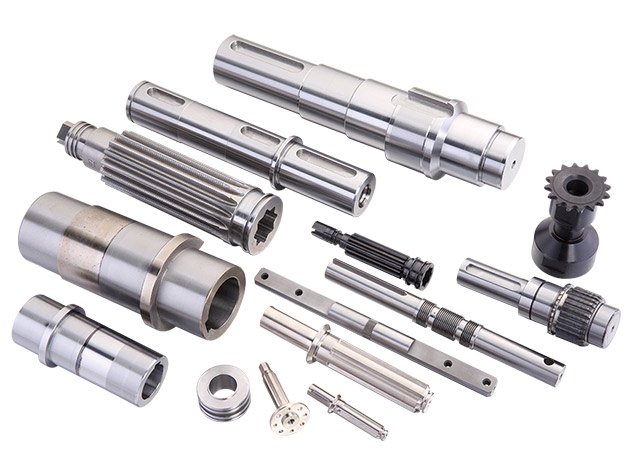
Supply chain resilience also depends on early planning. Long-lead materials, special alloys, heat-treatment capacity, grinding resources, and inspection equipment should be assessed before volume commitments are made. A capable partner can identify potential bottlenecks, establish approved alternatives where technically acceptable, and align capacity with the customer’s forecast. The result is a production plan that addresses both engineering performance and commercial continuity.
For OEM procurement teams, the value of integration can be measured through fewer supplier interfaces, shorter qualification cycles, reduced logistics coordination, and clearer corrective-action ownership. For engineering teams, it can mean faster feedback on design changes and better visibility into how a drawing will perform in production. For operations teams, it can mean consistent documentation, lot traceability, and more predictable delivery performance.
4. Industry Applications
Custom gears and transmission components are used across industries where controlled motion, torque transfer, positioning accuracy, and long service life are essential. The appropriate manufacturing approach depends on load, speed, environment, duty cycle, regulatory requirements, and production volume.
Aerospace and Defense
Aerospace actuation systems, landing gear mechanisms, flight-control assemblies, and auxiliary equipment require tight control of weight, strength, traceability, and dimensional accuracy. Gear components may be produced from high-strength alloys and combined with precision shafts, housings, and structural components. For related requirements, manufacturers can review IndustryApex Technology’s aerospace CNC machining and titanium aircraft parts capabilities.
Medical and Laboratory Equipment
Medical equipment often uses compact gears for positioning mechanisms, robotic instruments, imaging systems, pumps, and automated laboratory devices. These parts may require corrosion-resistant materials, clean manufacturing practices, burr-free edges, and complete documentation. The broader production environment should be evaluated alongside the component design, especially when gears are installed in high-precision devices. IndustryApex Technology’s ISO-certified CNC machining for medical components provides relevant context for regulated and high-precision applications.
Hydraulics and Fluid Power
Hydraulic systems use gears in pumps, motors, drive assemblies, and control mechanisms. The component must maintain reliable geometry under pressure, lubrication, temperature variation, and continuous cycling. Surface finish, concentricity, tooth accuracy, and material hardness can directly affect leakage, efficiency, noise, and wear. Customers developing pump-related assemblies can explore the hydraulic pump parts manufacturing resource for additional application information.
Automotive and Mobility
Automotive transmissions, electric drive units, steering systems, seat mechanisms, pumps, and actuators all depend on repeatable gear performance. Programs may move from prototype quantities to thousands or millions of pieces, making cycle time, tool life, automated inspection, and process capability central to commercial success. Electric mobility also places greater emphasis on acoustic performance, low friction, compact packaging, and efficient torque transmission.
Industrial Automation and Construction Equipment
Robotic systems, packaging machines, machine tools, construction equipment, agricultural machinery, and material-handling systems use custom gears to manage high loads and repeated motion. These applications may require impact resistance, contamination tolerance, special coatings, or large-format machining. A scalable supplier can support both precision subassemblies and heavy-duty components while maintaining consistent documentation and quality controls.
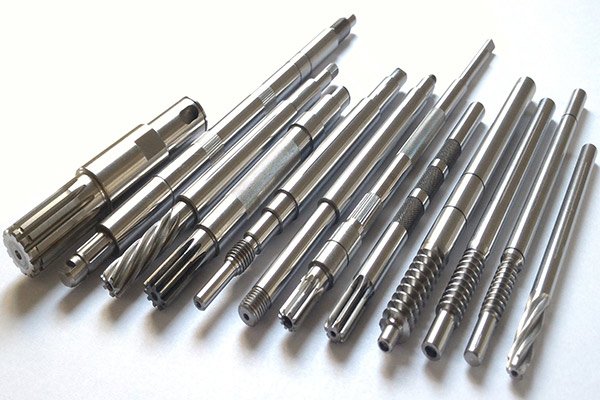
Across these markets, the most effective sourcing strategy connects application requirements to a clear production route. The supplier should be able to explain which features are machined, generated, ground, treated, inspected, and documented, as well as how each step affects cost and delivery.
5. Call to Action
Custom gear manufacturing should be evaluated as a complete engineering and supply chain program, not as a standalone cutting operation. The right partner can help validate the design, select appropriate materials and processes, control secondary operations, document quality, and scale production without losing repeatability.
IndustryApex Technology and IndustryApex CNC work with global OEMs and Tier 1 suppliers on precision gears, transmission components, shafts, housings, and related assemblies. Share your drawings, CAD files, material requirements, annual volume, inspection criteria, and target schedule with the engineering team through the Contact Us page. For an overview of available precision manufacturing services, visit the IndustryApex CNC home page.
A structured review at the beginning of the program can identify manufacturability improvements, reduce downstream risk, and establish a practical path from prototype validation to stable mass production.