
- Shaft
- Molds&Tools
- Hydraulics And Pump
- Hair transplant needle
- Hydraulics And Pump
- Precision CNC Shaft Machining Manufacturer for High Performance Applications
- Energy Industry CNC Machining Parts Supplier
- Aerospace Structural Components for OEM Programs
- Aerospace Structural Components for OEM Programs
- Automotive & EV CNC Machining Parts Supplier for OEM and Tier 1
- Medical Device CNC Machining Services
Integrating 3D Printing with Traditional CNC for Rapid Prototyping

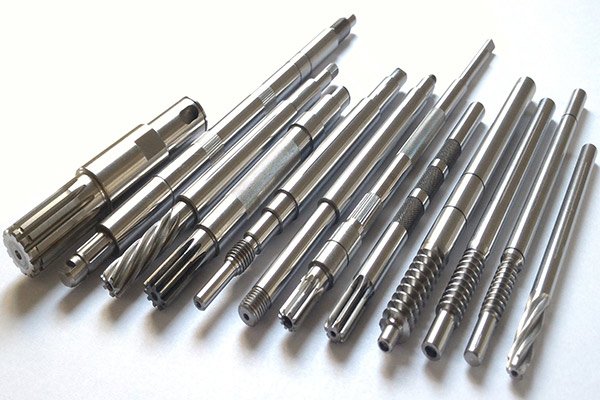
Integrating 3D Printing with Traditional CNC for Rapid Prototyping
For global OEMs and Tier 1 suppliers, rapid prototyping is no longer defined solely by how quickly a physical part can be produced. The practical measure is how quickly a team can obtain a functional, inspectable, repeatable, and supply-chain-ready component that supports a sound production decision. Integrating additive manufacturing with conventional CNC machining creates a more capable development workflow: 3D printing accelerates geometry validation and early iteration, while CNC machining delivers the tolerance control, material integrity, surface finish, and inspection confidence required for functional qualification.
1. Executive Summary
3D printing and CNC machining are often positioned as competing manufacturing methods. In an effective engineering environment, they are complementary processes with different strengths. Additive manufacturing is particularly valuable for producing complex geometries quickly, consolidating early assemblies, testing ergonomic concepts, and validating fluid paths or internal features that would be difficult to machine conventionally. CNC machining is essential when a prototype must represent final production conditions, including isotropic material properties, precise datums, controlled fits, threaded interfaces, tight geometric tolerances, and specified surface finishes.
The integrated approach begins with design intent rather than process preference. Engineers should identify which features require fast visual confirmation, which surfaces establish functional interfaces, which dimensions are critical to fit or sealing, and whether the prototype must withstand thermal, mechanical, chemical, or pressure loads. A printed part may be appropriate for initial packaging studies and flow visualization, while a CNC-machined prototype may be required for load testing and customer qualification. In many cases, the best result is a hybrid part: an additive preform or printed fixture combined with CNC-machined critical features.
This strategy reduces prototype lead time without transferring unnecessary production risk into later development phases. It also improves sourcing decisions by engaging a manufacturing partner early enough to evaluate material availability, machining access, inspection requirements, process capability, and scale-up constraints. IndustryApex Technology, operating through IndustryApex CNC, supports this model by combining engineering coordination with controlled precision manufacturing capabilities for complex OEM programs.
2. Technical Deep Dive
Successful integration starts with a clear division of labor between additive and subtractive processes. Additive manufacturing builds material layer by layer, allowing designers to create lightweight structures, internal channels, conformal forms, and complex organic surfaces with limited tooling investment. CNC machining removes material from a billet, bar, plate, forging, or near-net preform. It provides superior control over critical faces, bores, threads, sealing lands, bearing seats, and datum relationships.
For early design iterations, polymer printing can be used to verify assembly clearances, operator handling, cable routing, packaging envelopes, and fixture concepts. Metal additive manufacturing becomes more relevant when testing geometry under elevated temperature or when a low-volume component requires internal structures that conventional tools cannot access. However, engineers should not assume that a printed metal prototype directly represents a machined production part. Additive processes can introduce anisotropy, porosity, residual stress, support-removal constraints, rough surfaces, and variation associated with build orientation.
CNC operations resolve many of these limitations when applied to the right features. A hybrid workflow may print or additively build a near-net shape, then machine mounting faces, reference datums, precision bores, threaded holes, and sealing surfaces. This approach preserves geometric freedom while ensuring that the interfaces governing system performance meet drawing requirements. Five-axis machining is particularly useful for accessing compound surfaces and maintaining positional relationships among features without repeated setups.
Design for manufacturing reviews should classify features into three groups: additive-only features, CNC-critical features, and features that can be altered to reduce cost or lead time. Additive-only features may include noncritical lattice regions, temporary test forms, or internal visualization channels. CNC-critical features include tight bores, hole patterns, threads, press fits, gear-related surfaces, hydraulic lands, and precision flatness requirements. The third group requires engineering judgment. A deep narrow pocket, for example, might be redesigned with a larger cutter radius or split into two manufacturable elements.
Material selection must also follow final-use requirements. A printed polymer model can support form-and-fit validation, but it cannot establish the performance of a titanium, aluminum, stainless steel, tool steel, ceramic, or engineering-plastic production design. For functional prototypes, the material condition, heat treatment, grain structure, hardness, corrosion resistance, and post-processing route should align as closely as possible with production intent. CNC machining from certified stock often provides the clearest route for evaluating these properties.
Metrology is the final technical bridge between prototype speed and engineering confidence. A prototype should be inspected against the dimensions that govern assembly and function, not merely checked visually. Coordinate measuring machines, optical measurement, gauges, surface-finish testing, and material documentation should be planned before fabrication. The data gathered during prototyping becomes more valuable when it directly informs tolerance allocation, inspection planning, and eventual supplier qualification.
A practical prototype sequence may therefore include printed design models, machined functional prototypes, hybrid builds for complex geometry, and pilot components produced through the proposed production route. Each phase answers a different engineering question. Combining them avoids both extremes: waiting too long for a fully machined prototype and relying too heavily on a printed component that cannot verify real-world performance.
3. The ODM & Supply Chain Advantage
For OEM and Tier 1 programs, the value of hybrid prototyping is multiplied when the supplier can coordinate design support, production processes, quality controls, and material sourcing within a single operating system. IndustryApex Technology’s core identity is that of a supply chain integrator and ODM solution provider. This matters because prototype decisions influence more than a single part. They affect approved materials, secondary operations, inspection methods, logistics planning, supplier risk, and the feasibility of ramping from a small engineering batch to repeat production.
With over 30 years of manufacturing experience, IndustryApex Technology operates a fully controlled precision manufacturing system supported by ERP management. This structure gives program teams better visibility into material status, process routing, work-in-progress, delivery planning, and quality records. Rather than treating prototyping as an isolated purchasing event, the engineering team can establish a controlled path from prototype release through low-volume validation and production supply.
The manufacturing system combines 3-axis, 4-axis, and 5-axis CNC machining with EDM, precision grinding, and industrial ceramics capabilities. These processes are important when a part requires more than general machining. EDM can produce intricate cavities, sharp internal features, and hardened-material details where conventional cutting access is limited. Precision grinding supports demanding size, roundness, flatness, and surface-finish requirements. Industrial ceramics address applications where wear resistance, electrical insulation, thermal performance, or chemical stability exceed the capability of conventional metals or polymers.
ERP-based coordination also supports design changes, which are common during rapid prototyping. Revision control, material traceability, routing updates, and inspection documentation need to move together. A prototype supplier that understands the final supply chain can identify when a design change affects raw-material availability, tooling, cycle time, packaging, or downstream assembly. This prevents seemingly minor prototype changes from creating a production constraint months later.
For global OEMs and Tier 1 suppliers, supply-chain resilience is a major consideration. A capable ODM partner can coordinate processes across a qualified manufacturing network while retaining responsibility for engineering communication, quality expectations, and delivery execution. The result is a more disciplined path from concept to sourced component, particularly for assemblies with multiple precision parts, specialized materials, or demanding documentation requirements.
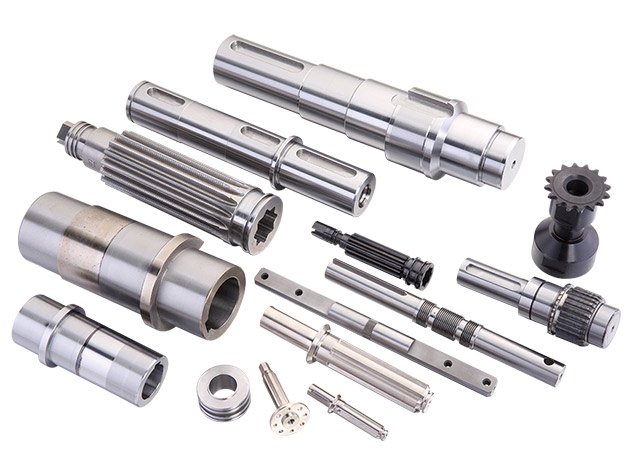
The commercial advantage is not simply a faster quotation. It is fewer handoffs between design, procurement, manufacturing, and quality teams. When the same partner supports prototype manufacturability and production readiness, lessons from early iterations can be embedded directly into the final process plan. That reduces the likelihood of a successful prototype becoming an expensive or unstable production component.
4. Industry Applications
In aerospace, additive manufacturing can quickly validate lightweight brackets, ducting concepts, structural envelopes, and complex fluid-routing geometries. CNC machining remains central for flight-critical interfaces, precision structural features, high-strength titanium components, and tightly controlled assemblies. OEM teams developing aircraft systems can explore production-oriented options through IndustryApex Technology’s aerospace CNC machining capabilities, including titanium aircraft parts and five-axis structural components.
Medical-device development benefits from rapid form studies, surgical workflow models, custom fixtures, and early implant geometry evaluations. Yet medical components require strict attention to material selection, surface condition, traceability, cleanability, and dimensional consistency. CNC-machined titanium implants, surgical instruments, and precision device parts provide the functional evidence required before production release. Relevant requirements and capabilities are detailed in the ISO-certified medical CNC machining program.
Hydraulic, fluid-control, and pumping applications illustrate why hybrid prototyping needs disciplined process selection. Printed models can help engineers evaluate manifold packaging and conceptual flow paths. However, actual pressure performance depends on machined port geometry, sealing faces, valve interfaces, bore quality, and material integrity. Precision-machined hydraulic pump parts are necessary to validate leakage control, pressure cycles, wear behavior, and assembly fit.
Additional applications include semiconductor equipment, energy systems, automation equipment, automotive drivetrains, optical hardware, mold components, industrial pumps, and precision instruments. Across these sectors, the integrated workflow is consistent: use additive methods to learn quickly, use CNC machining to verify what must perform, and use supply-chain planning to ensure the validated design can be manufactured reliably at the required volume.
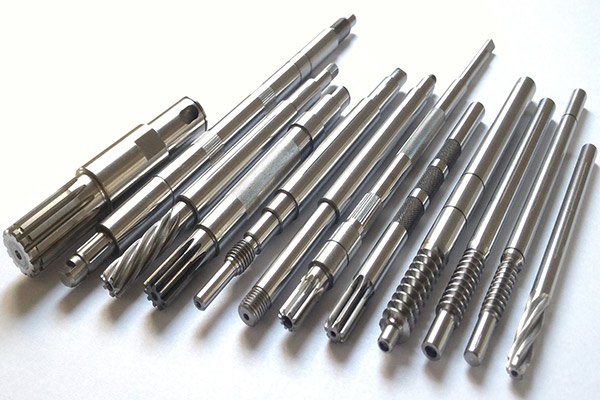
The most mature organizations do not ask whether 3D printing or CNC is better. They establish a prototype strategy that assigns each technology to the engineering problem it solves best. This improves the speed of learning while protecting the integrity of qualification data and future production economics.
5. Call to Action
Whether your program requires a printed concept model, a CNC-machined functional prototype, or a hybrid route for complex geometry and precision interfaces, IndustryApex Technology can help align engineering objectives with a practical supply plan. Engage the manufacturing team early to review drawings, materials, critical tolerances, inspection needs, and anticipated production volumes. Contact IndustryApex Technology to discuss your rapid prototyping and ODM manufacturing requirements.