
- Shaft
- Molds&Tools
- Hydraulics And Pump
- Hair transplant needle
- Hydraulics And Pump
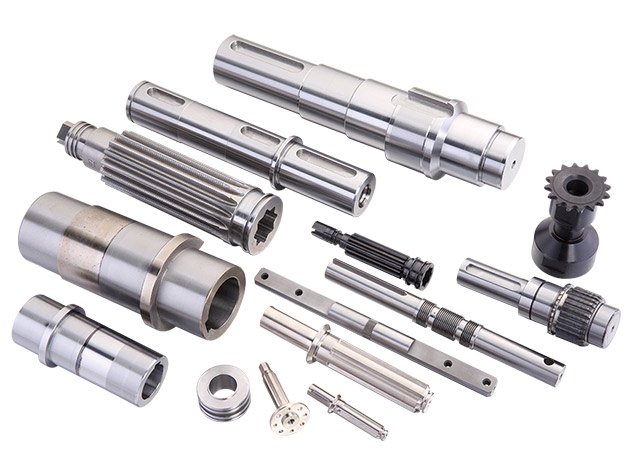
- Precision CNC Shaft Machining Manufacturer for High Performance Applications
- Energy Industry CNC Machining Parts Supplier
- Aerospace Structural Components for OEM Programs
- Aerospace Structural Components for OEM Programs
- Automotive & EV CNC Machining Parts Supplier for OEM and Tier 1
- Medical Device CNC Machining Services
How ODM Solution Providers Are Transforming Medical Device Manufacturing

How ODM Solution Providers Are Transforming Medical Device Manufacturing
Medical device manufacturers are under increasing pressure to bring products to market faster while meeting rigorous quality, traceability, and regulatory requirements. At the same time, supply chain volatility, specialist labor shortages, material constraints, and rising development costs are making it difficult for OEMs and Tier 1 suppliers to manage every manufacturing activity internally. Original Design Manufacturing (ODM) solution providers are addressing these challenges by combining engineering support, precision manufacturing, process development, quality management, and supply chain coordination within one accountable partner.
For global medical device companies, the value of an ODM provider is not limited to outsourced machining. The strongest providers operate as manufacturing system integrators. They help translate product requirements into manufacturable designs, select suitable materials and processes, coordinate production resources, control documentation, and support consistent delivery from prototype through serial production. IndustryApex Technology, operating through the IndustryApex CNC platform, provides this type of integrated capability for customers requiring complex, high-precision components and dependable supply chain execution.
1. Executive Summary
ODM solution providers are transforming medical device manufacturing by consolidating multiple stages of the product realization process. Instead of coordinating separate engineering firms, machine shops, finishing suppliers, inspection laboratories, and logistics providers, medical device OEMs can work with an integrated partner that manages the complete manufacturing path.
This model creates measurable advantages. Design-for-manufacturing feedback can be introduced earlier, reducing costly revisions and improving first-pass yield. CNC machining, electrical discharge machining, precision grinding, and industrial ceramic production can be selected according to functional requirements rather than supplier availability. Enterprise resource planning systems improve production visibility, while centralized quality controls strengthen traceability across materials, processes, inspections, and shipments.
The result is a more resilient manufacturing structure. Medical device companies gain access to engineering expertise, specialized equipment, controlled production capacity, and a partner capable of scaling from development quantities to repeat production. For components such as titanium implants, surgical instruments, diagnostic equipment parts, fluid-control assemblies, and high-precision device structures, an experienced ODM provider can reduce technical risk while improving schedule reliability.
2. Technical Deep Dive
Medical devices place unusual demands on component manufacturing. Parts may need to combine tight dimensional tolerances with biocompatibility, corrosion resistance, low surface roughness, sterilization compatibility, and reliable performance over repeated use. A component that appears simple in a drawing can therefore require carefully coordinated decisions involving material grade, tool selection, workholding, machining sequence, heat treatment, surface finishing, cleaning, and inspection.
Precision CNC machining remains central to this work. Three-axis machining is suitable for many prismatic components, while four- and five-axis machining enables the production of complex anatomical geometries, angled features, contoured surfaces, and multi-sided parts with fewer setups. Reducing setups can improve positional accuracy and reduce the risk of variation between machining operations. It can also shorten production time for components that would otherwise require multiple fixtures.
Electrical discharge machining is valuable when medical parts contain narrow slots, intricate profiles, small internal features, or difficult-to-machine geometries. EDM can process hardened materials and conductive alloys without applying the same cutting forces associated with conventional machining. This makes it useful for delicate or highly detailed features where deformation and tool access are concerns.
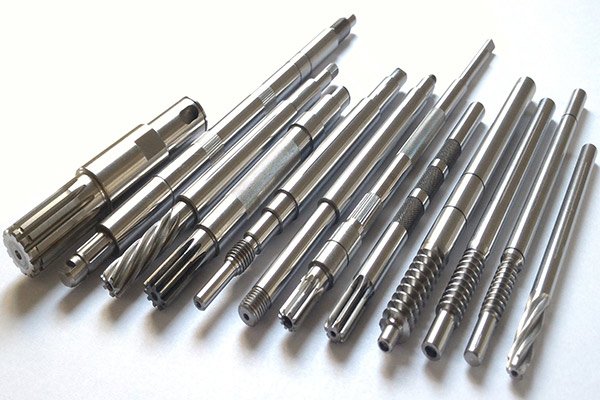
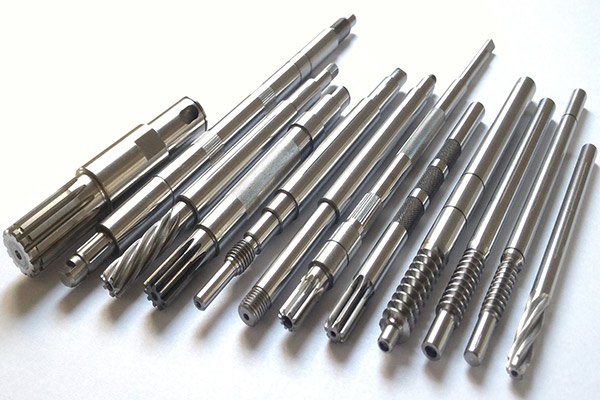
Precision grinding provides another layer of control for components requiring exceptional flatness, roundness, parallelism, or surface finish. Instruments, guide components, bearing surfaces, and mating elements may depend on grinding to achieve predictable movement and stable assembly performance. In each case, the process should be selected based on the part’s functional requirements and validated through an appropriate inspection plan.
Industrial ceramics extend the material options available to medical and laboratory equipment manufacturers. Ceramic components can offer electrical insulation, wear resistance, high-temperature stability, chemical resistance, and low particle generation. Their production requires specialized knowledge because ceramics behave differently from metals during forming, sintering, grinding, and finishing. An ODM provider with both metal and ceramic capabilities can help customers choose the best material system for the application instead of forcing every design into a conventional metal workflow.
Quality engineering is equally important. Medical device components may require inspection of critical dimensions using coordinate measuring machines, optical systems, surface-finish equipment, or specialized gauges. Material certification, process records, revision control, nonconformance management, and lot traceability must be integrated into the manufacturing process. A capable supplier can help establish control plans around critical-to-function characteristics and provide documentation that supports the customer’s internal quality and regulatory procedures.
Manufacturability should be addressed before production begins. An ODM partner can review wall thickness, corner radii, tolerance relationships, datum structures, tool access, burr risks, cleaning requirements, and inspection accessibility. These reviews often identify opportunities to simplify the design without compromising clinical performance. They may also reveal where a tolerance is unnecessarily restrictive, where a surface finish should be specified functionally, or where a different process would deliver more reliable results.
3. The ODM & Supply Chain Advantage
The defining advantage of an ODM solution provider is the ability to connect product engineering with controlled manufacturing execution. IndustryApex Technology’s core identity is that of a supply chain integrator and ODM solution provider serving global OEM and Tier 1 suppliers. This means the relationship can begin with a drawing, CAD model, sample, or performance requirement and develop into a coordinated production program.
A fully controlled precision manufacturing system creates consistency across projects. With more than 30 years of manufacturing experience and ERP-supported planning, IndustryApex Technology can organize material purchasing, capacity allocation, work orders, production status, inspection records, and delivery coordination through a connected operating structure. ERP does not replace engineering judgment, but it improves the visibility needed to manage complex programs with multiple part numbers, revisions, materials, and delivery milestones.
Supply chain integration also reduces the communication burden for the customer. Instead of managing separate conversations with machining, grinding, EDM, ceramic, finishing, and inspection suppliers, the OEM can work through one accountable technical and commercial interface. This simplifies issue resolution and makes it easier to identify the true cause of delays, quality deviations, or cost increases.
IndustryApex Technology’s manufacturing edge includes three- to five-axis CNC machining, EDM, precision grinding, and industrial ceramics. This range supports a broad set of medical manufacturing requirements, from small precision instruments to complex structural and fluid-control components. The combination is especially valuable when a product contains parts that require different processes but must still meet a common quality system and delivery plan.
For global OEMs and Tier 1 suppliers, the ODM model can improve supply chain resilience in several ways. First, early technical review reduces the likelihood that production will depend on an unrealistic tolerance or an unavailable material. Second, centralized planning makes capacity and lead-time risks visible earlier. Third, process knowledge accumulated across related programs can be applied to future designs, shortening the learning curve for new products. Finally, a stable manufacturing partner can support controlled scaling when demand changes.
Cost management is another important consideration. The lowest unit price is not always the lowest total cost. Engineering changes, rejected lots, delayed launches, emergency freight, supplier qualification, and repeated inspections can significantly increase the cost of fragmented sourcing. An ODM provider can evaluate the total manufacturing system, including setup reduction, material utilization, process sequence, inspection effort, and packaging requirements. This supports decisions based on lifecycle value rather than quoted piece price alone.
Supplier collaboration is particularly important during new product introduction. Prototype parts may be needed quickly, but prototype methods should also provide information that is useful for production planning. An experienced ODM partner can separate features that require production-equivalent validation from those suitable for early engineering builds. As the design matures, the same partner can help establish repeatable fixtures, inspection routines, process parameters, and packaging standards.
Medical OEMs can review IndustryApex Technology’s medical component machining capabilities when evaluating titanium implants, surgical instruments, and high-precision device parts. Related expertise in other demanding sectors, including aerospace titanium and structural components, can also inform material control, complex machining, and high-reliability production practices.
4. Industry Applications
ODM manufacturing support applies across a wide range of medical and life-science products. In surgical instrumentation, suppliers may produce cutting tools, handles, guides, clamps, end-effectors, and precision mechanisms. These parts often require ergonomic surfaces, controlled edges, corrosion-resistant materials, and reliable sterilization performance. A coordinated machining and finishing process helps maintain both functional accuracy and product consistency.
Implantable components create an even more demanding environment. Titanium and other specialized materials must be machined without compromising surface integrity or introducing contamination. Critical features may include threads, porous interfaces, curved anatomical surfaces, and tightly controlled mating zones. Manufacturing partners must understand how tooling, fixturing, cleaning, inspection, and packaging affect the final product.
Diagnostic and laboratory equipment also depends on precision-manufactured parts. Optical mounts, fluid-handling blocks, sample-processing components, sensor housings, and actuator assemblies may require tight positional relationships and stable performance over repeated cycles. In these applications, industrial ceramics may provide insulation or chemical resistance, while precision grinding and CNC machining deliver the required fit and movement.
Fluid-control systems represent another important application. Medical pumps, dosing mechanisms, valves, manifolds, and laboratory fluid-handling equipment depend on controlled internal passages, sealing surfaces, valve interfaces, and wear-resistant components. Expertise in hydraulic pump and fluid-control parts can support the production of related medical assemblies where flow accuracy, pressure stability, and leakage prevention are essential.
ODM providers can also support medical automation and equipment manufacturers. Robotic surgical systems, sterilization equipment, imaging platforms, and automated laboratory lines contain many low-volume, high-complexity parts. These programs benefit from a partner capable of managing varied geometries, frequent engineering revisions, and coordinated deliveries across a complete assembly.
The same integrated approach applies to chemical-processing and pharmaceutical equipment used in controlled environments. Components may need resistance to aggressive media, smooth cleanable surfaces, low particle generation, or specialized ceramic and metal material combinations. Manufacturing decisions should be linked to the equipment’s cleaning, validation, and operating requirements rather than made solely from a machining perspective.
5. Call to Action
Medical device manufacturing is moving toward closer collaboration between product designers, quality teams, and specialized manufacturing partners. OEMs and Tier 1 suppliers that engage an ODM solution provider early can improve manufacturability, reduce supply chain complexity, and create a more reliable path from prototype to production.
IndustryApex Technology combines more than 30 years of manufacturing experience with ERP-supported coordination, precision CNC machining, EDM, precision grinding, and industrial ceramic capabilities. As a supply chain integrator and ODM solution provider, the company supports global customers that need technical responsiveness, controlled processes, and dependable delivery for high-precision components.
To discuss a medical component, prototype, production program, or multi-process sourcing requirement, visit the IndustryApex CNC home page or contact IndustryApex Technology with your drawings, specifications, material requirements, target quantities, and delivery expectations. Early technical engagement can help establish the right process, quality plan, and supply chain structure before production risk becomes expensive.