- Shaft
- Molds&Tools
- Hydraulics And Pump
- Hair transplant needle
- Hydraulics And Pump
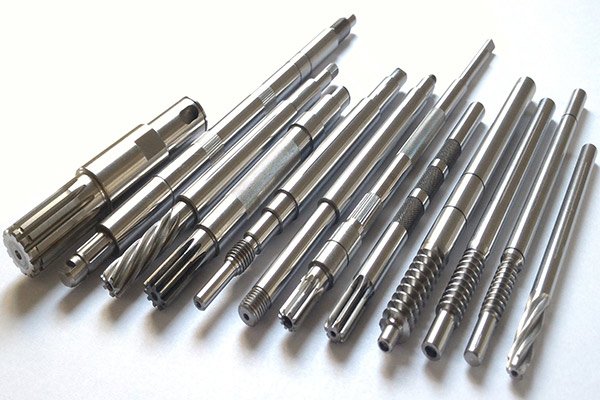
- Precision CNC Shaft Machining Manufacturer for High Performance Applications
- Energy Industry CNC Machining Parts Supplier
- Aerospace CNC Machining Parts Manufacturer
- Aerospace CNC Machining Parts Manufacturer
- Automotive & EV CNC Machining Parts Supplier for OEM and Tier 1
- Medical CNC Machining Parts Supplier for Precision Medical Devices

Precision CNC Machining for EV Motor Housings: Tight Tolerances Explained

Precision CNC Machining for EV Motor Housings: Tight Tolerances Explained
Electric vehicle motor housings are no longer simple protective shells. They are structural, thermal, sealing, and alignment-critical components that directly influence motor efficiency, noise, durability, and assembly yield. For global OEMs and Tier 1 suppliers, the housing is a manufacturing challenge where casting quality, CNC machining accuracy, material stability, inspection discipline, and supply chain control must work as one system.
1. Executive Summary.
EV motor housings sit at the center of the e-drive unit. They locate the stator, support bearings, manage coolant flow, seal against contamination, and maintain concentricity between rotating and stationary elements. A few microns of deviation in the wrong feature can become motor noise, heat buildup, premature bearing wear, leakage, or assembly rejection. This is why precision CNC machining is a strategic process, not a commodity operation.
The most important tolerance requirements usually concentrate around bearing bores, stator inner and outer locating diameters, shaft centerline relationships, coolant channel interfaces, mounting datums, sealing faces, and connector ports. These features often require tight positional accuracy, roundness, cylindricity, flatness, perpendicularity, and surface finish control across a relatively large and thin-walled aluminum or magnesium casting. The difficulty is not only hitting a size on one feature. The real difficulty is holding the whole geometric relationship after clamping, roughing, heat input, tool pressure, stress release, deburring, washing, inspection, and transport.
At IndustryApex Technology, operating through the IndustryApex CNC platform, we approach EV motor housing programs as integrated engineering and supply chain projects. Our role is to help customers move from print to repeatable production by aligning process design, fixture strategy, CNC capability, quality planning, and supplier coordination. For buyers evaluating a China-based precision manufacturing partner, the key question is not simply whether a supplier owns CNC machines. It is whether the supplier can control the full precision manufacturing system behind the part. More information about our machining platform is available through IndustryApex CNC.
2. Technical Deep Dive.
Most EV motor housings begin as die cast, low pressure cast, sand cast, forged, or extruded aluminum blanks. The base material may look stable, but internal stress, porosity, local hardness variation, and thin-wall geometry all affect machining behavior. When the part is clamped, metal is removed, and local heat enters the component, the housing can move. If this movement is not predicted and controlled, a bore that measures correctly immediately after machining may shift after unclamping or during final inspection.
The first critical engineering issue is datum strategy. EV motor housings normally require a controlled relationship between the stator bore, bearing bore, end-face datums, and mounting interfaces. If datums are selected only for convenient machining rather than functional alignment, the part may pass individual size checks but fail assembly behavior. A mature machining plan establishes robust primary, secondary, and tertiary datums that reflect how the housing locates inside the motor assembly. This includes clear control of datum transfer between rough machining, semi-finishing, finishing, and inspection.
Bearing bores are among the highest-risk features. A bearing seat may require tight diameter tolerance, roundness, cylindricity, and coaxiality relative to another bore or shaft centerline. Poor control here can increase vibration and noise, reduce motor life, and create inconsistent bearing preload. Boring, fine boring, interpolation, reaming, and precision finishing methods must be selected based on bore depth, interrupted cuts, wall thickness, tool overhang, and required surface finish. Tool wear monitoring is also essential because a small drift in cutting edge condition can change both diameter and surface integrity.
Stator locating features create a different challenge. The stator must be positioned accurately to preserve the electromagnetic air gap. Uneven air gap can reduce efficiency and increase acoustic problems. The housing feature that receives or locates the stator must maintain diameter, circularity, and perpendicularity to the motor axis. In many cases, the part is large enough that thermal expansion during machining and inspection becomes measurable. Stable temperature control and consistent inspection conditions are therefore part of tolerance control, not optional quality decoration.
Sealing surfaces and coolant channels add another layer. EV motor housings often integrate water jackets, O-ring grooves, flange faces, pipe ports, and threaded interfaces. Flatness, surface roughness, groove width, groove depth, and positional accuracy affect leakage risk. A seal groove with sharp burrs, chatter marks, or inconsistent depth can fail even when the nominal size looks acceptable. Deburring and cleaning must be treated as engineered process steps. Chips trapped in coolant channels or burrs left near sealing features can cause field failures that are far more expensive than machining defects found at the factory.
Thin walls are especially sensitive to workholding. Excessive clamping force distorts the housing during machining. Once the part is released, the geometry springs back and produces out-of-tolerance conditions. Good fixturing distributes load, supports functional areas, avoids overconstraint, and permits repeatable loading by operators or robots. For higher-volume production, hydraulic or pneumatic fixtures may be combined with in-process probing to verify seating conditions before cutting begins. For lower-volume or development programs, modular fixtures can shorten lead time while still maintaining engineering discipline.
The machining sequence usually separates stress-relief roughing from final finishing. Rough operations remove stock and open major features, while semi-finishing stabilizes key surfaces before final passes. Finishing operations are kept light, controlled, and consistent. Cutting parameters are tuned to reduce heat, chatter, and tool deflection. Coolant concentration, filtration, chip evacuation, and toolpath strategy all influence final quality. On 5-axis platforms, fewer setups can reduce datum transfer error, but the machine, fixture, postprocessor, and inspection plan must be capable enough to justify the approach.
Inspection closes the loop. Coordinate measuring machines, roundness instruments, air gauges, surface roughness testers, thread gauges, and leak testing may all be required depending on the housing design. Statistical process control is important for features that drift with tool wear or thermal conditions. A capable supplier should also use measurement data to correct the process, not only to sort parts. For production buyers, the strongest evidence is not a single perfect sample. It is stable capability across multiple lots, with clear control plans, traceability, and corrective action discipline.
3. The ODM & Supply Chain Advantage.
For global OEM and Tier 1 suppliers, EV motor housing sourcing is not only a machining purchase. It is an engineering, quality, logistics, and risk management decision. The supplier must interpret technical drawings, understand functional requirements, manage upstream blank quality, build stable CNC processes, control inspection records, and coordinate delivery schedules. A low unit price loses its value quickly if the program suffers from casting instability, unclear deviation management, late samples, or repeated dimensional disputes.
IndustryApex Technology positions itself as a supply chain integrator and ODM solution provider. This means we can support customers beyond build-to-print machining. Where appropriate, our engineering team can participate in manufacturability review, tolerance discussion, fixture planning, process flow design, inspection planning, and supplier coordination. For EV motor housings, early engineering input is often valuable because small design adjustments to wall thickness, datum pads, radii, tool access, seal groove structure, or inspection references can improve yield without compromising product function.
Our manufacturing edge is a fully controlled precision manufacturing system supported by ERP management and more than 30 years of accumulated machining and manufacturing experience. ERP-based coordination matters because EV programs often involve multiple process steps, including blank sourcing, CNC machining, heat treatment or aging, surface treatment, cleaning, inspection, packaging, and export logistics. Without system control, parts can move through the factory, but information does not always move with them. Traceability, routing control, revision management, and delivery visibility help reduce hidden supply chain risk.
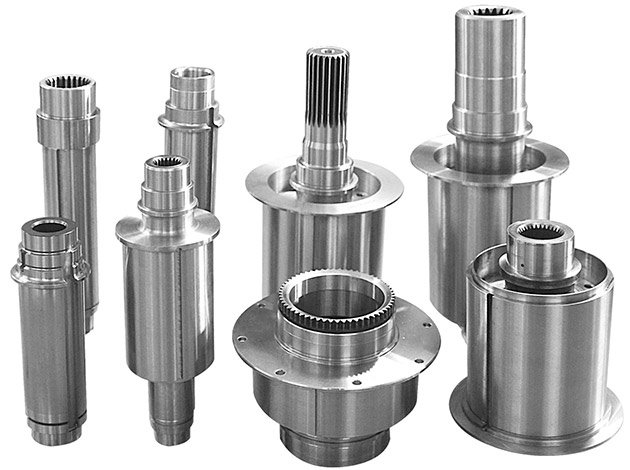
From a capability perspective, IndustryApex Technology supports 3-axis, 4-axis, and 5-axis CNC machining, EDM, precision grinding, and industrial ceramics manufacturing. While EV motor housings are usually aluminum or magnesium components, the broader capability base is important for customers that source complete mechanical packages. A motor or drivetrain program may also require shafts, sleeves, thermal management parts, fixtures, ceramic insulation-related components, precision ground elements, or specialized tooling. Customers can consolidate technical communication with a partner that understands multiple manufacturing processes.
The same manufacturing logic that supports EV motor housings also applies across other demanding sectors. Aerospace programs, for example, place strong emphasis on lightweight structures, difficult materials, and controlled process documentation, as shown in our aerospace CNC machining capabilities. Medical component manufacturing requires consistency, surface quality, and strict quality expectations, which are reflected in our ISO certified CNC machining for medical components. Hydraulic and pump components demand close fits, leak control, and precision bore quality, similar to the sealing and fluid channel discipline needed in EV cooling systems; related experience is detailed in our hydraulic pump parts manufacturing service.
For procurement teams, the ODM and supply chain advantage becomes visible in program execution. A strong supplier helps clarify specifications before tooling investment, identifies critical-to-quality features, establishes realistic inspection methods, and communicates risks before they become delivery problems. This is especially important when customers are scaling from prototype to pilot production and then to serial production. The technical target does not change, but the control method must mature as volume increases.
4. Industry Applications.
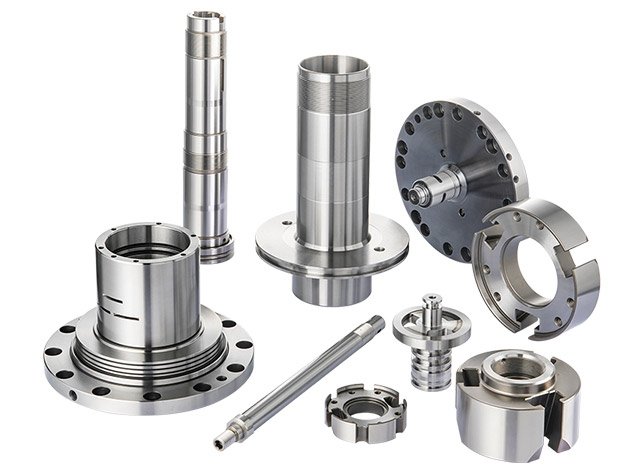
Precision CNC machined EV motor housings are used across passenger cars, commercial vehicles, electric buses, off-highway equipment, motorcycles, marine propulsion, and industrial electrification systems. Each application has its own balance of volume, cost, weight, durability, sealing, and thermal performance. A premium passenger vehicle may focus heavily on noise, vibration, and harshness performance. A commercial vehicle may emphasize durability, service life, coolant reliability, and stable output under continuous load. Industrial equipment may prioritize ruggedness, mounting flexibility, and low maintenance.
In passenger EVs, compact e-drive packaging creates tight space constraints. The housing often integrates multiple functions, including stator location, gearbox interface, inverter mounting, coolant channels, and structural attachment points. This integration reduces part count, but it increases machining complexity. The more functions that are combined into one casting, the more important datum planning and tolerance stack analysis become.
In commercial and heavy-duty EV platforms, motor housings can be larger and exposed to harsher duty cycles. Thermal cycling, vibration, road contamination, and long operating hours place additional pressure on sealing surfaces, bolt patterns, bearing support, and material stability. For these programs, repeatable machining and leak control are closely connected to warranty performance. Buyers should evaluate whether their supplier can document process capability and maintain dimensional stability over long production runs.
Hybrid and range-extender systems also rely on precision housings and drivetrain interfaces. Although the power architecture differs from a pure battery electric vehicle, the machining requirements still include alignment, bore control, sealing, and mounting accuracy. As electrification spreads into construction machinery, agricultural machinery, and energy storage-related motion systems, similar housing requirements appear in lower-volume but higher-complexity projects.
The broader lesson is that EV motor housing machining cannot be separated from application context. A housing is not simply aluminum with holes and faces. It is a functional platform for rotating machinery, thermal management, electronics integration, and vehicle structure. The best machining partner understands that every tolerance has a reason, and every process decision should protect that reason.
5. Call to Action.
If you are developing or sourcing EV motor housings, the most productive time to involve a precision manufacturing partner is before the design and supply chain are locked. IndustryApex Technology can review drawings, discuss critical tolerances, evaluate manufacturability, propose process routes, and support prototype, pilot, and production requirements for global OEM and Tier 1 customers.
Whether your project requires tight bearing bore control, stator alignment, leak-tested coolant features, multi-axis machining, precision inspection, or coordinated supply chain execution, IndustryApex CNC can support the transition from engineering concept to stable manufacturing. To start a technical discussion, share your drawings, specifications, annual volume expectations, target material, and inspection requirements through our contact page. Our engineering and supply chain team will review the requirements and respond with a practical manufacturing path.