- Shaft
- Molds&Tools
- Hydraulics And Pump
- Hair transplant needle
- Hydraulics And Pump
- Precision CNC Shaft Machining Manufacturer for High Performance Applications
- Energy Industry CNC Machining Parts Supplier
- Aerospace CNC Machining Parts Manufacturer
- Aerospace CNC Machining Parts Manufacturer
- Automotive & EV CNC Machining Parts Supplier for OEM and Tier 1
- Medical CNC Machining Parts Supplier for Precision Medical Devices
Titanium Implants: Challenges and Solutions in Medical CNC Machining


Titanium Implants: Challenges and Solutions in Medical CNC Machining
Executive Summary
Titanium implants occupy a demanding intersection of material science, precision engineering, regulatory control, and global supply-chain management. Orthopedic fixation devices, dental implants, spinal components, trauma plates, bone screws, and surgical-device components must meet exact dimensional, mechanical, surface, and traceability requirements. A minor machining inconsistency can affect implant fit, fatigue performance, osseointegration potential, assembly function, or downstream validation.
For global OEMs and Tier 1 suppliers, the central challenge is not simply finding a machine shop capable of cutting titanium. It is establishing a qualified manufacturing partner that can repeatedly control raw material provenance, process capability, inspection, documentation, lead time, and engineering change management. Titanium alloys provide exceptional biocompatibility, corrosion resistance, strength-to-weight performance, and fatigue resistance, but their low thermal conductivity, tendency to work harden, and strong chemical affinity at elevated temperatures make them difficult to machine efficiently.
Dixin Technology, operating through IndustryApex CNC, supports precision manufacturing programs where technical execution and supply-chain reliability must advance together. The company combines controlled CNC machining, EDM, precision grinding, industrial ceramics capability, quality discipline, and over 30 years of manufacturing experience to help customers convert complex titanium implant requirements into scalable, traceable production programs.
This analysis examines the major engineering challenges of titanium implant machining, the process controls required to address them, and the advantages of an ODM-oriented supply-chain integrator for medical-device procurement teams. The focus is practical: reducing production variation, protecting delivery continuity, improving manufacturability, and creating a dependable path from prototype through serial production.
Technical Deep Dive
Titanium Grade 2, Grade 4, Ti-6Al-4V, and Ti-6Al-4V ELI are widely specified for medical applications because they balance corrosion resistance, biocompatibility, and mechanical properties. However, their material behavior requires a machining strategy substantially different from common stainless steels or aluminum alloys. The same characteristics that make titanium valuable in the body can make it costly and difficult to manufacture without disciplined process engineering.
The first challenge is heat management. Titanium conducts heat poorly, so heat generated at the cutting edge is concentrated in the tool rather than dissipated into the workpiece or chip. Excessive localized temperature accelerates tool wear, increases the risk of edge chipping, creates inconsistent surface finish, and may introduce metallurgical concerns if the process is not properly controlled. Effective machining therefore depends on rigid workholding, short tool overhangs, stable cutting engagement, high-performance coated carbide tooling, optimized coolant delivery, and carefully selected feeds and speeds.
Chip control is equally important. Titanium can produce long, continuous chips that interfere with tool paths, damage machined surfaces, and disrupt unattended production. Programmed chip-breaking cycles, appropriate insert geometry, adaptive tool paths, and consistent coolant flow help prevent chip recutting. In multi-axis machining, collision avoidance and effective chip evacuation become particularly important because implant geometries often include deep cavities, contoured surfaces, narrow slots, threaded interfaces, and small-radius transitions.
Implant geometry introduces another layer of complexity. Bone plates and spinal devices may demand three-dimensional anatomical contours. Dental components can involve miniature features, tapered forms, internal connections, and high-quality threads. Trauma screws require controlled thread form, concentricity, drive-feature accuracy, and surface condition. These parts frequently require coordinated 3-, 4-, or 5-axis CNC operations, followed by EDM or precision grinding for difficult profiles, small features, or high-accuracy functional surfaces.
Surface integrity is a critical but sometimes underestimated machining outcome. A visually smooth component is not necessarily a compliant implant component. Burrs, tool marks, embedded contaminants, residual stress, sharp transitions, and damaged threads can complicate cleaning, inspection, coating, packaging, and clinical performance. Manufacturing plans should account for deburring, edge conditioning, surface-finishing allowances, cleaning compatibility, and handling controls from the earliest engineering review. Design-for-manufacturability discussions should define which surfaces are functionally critical, which features require datum-based inspection, and where finishing operations may affect tolerances.
Measurement strategy must match the functional risk of the part. Coordinate measuring machines, optical measurement, thread gauges, surface-finish measurement, dedicated fixtures, and in-process probing can be combined to verify dimensions that conventional inspection alone may not adequately protect. For complex titanium implants, a robust inspection plan links each critical-to-quality characteristic to a method, gauge, sampling frequency, acceptance criterion, and traceable record. First-article inspection, process capability analysis, and controlled reaction plans provide further confidence as a program scales.
Machinability also begins before the first operation. Material procurement must define alloy grade, applicable standards, condition, heat or lot identification, chemical composition, mechanical properties, and documentation needs. The wrong material substitution or incomplete certificate trail can create expensive downstream disruption. An experienced manufacturing partner reviews stock form, machining allowance, grain considerations where relevant, part orientation, and material utilization before production release. This front-end engineering work prevents avoidable scrap, excessive cycle time, and late-stage qualification issues.
The ODM & Supply Chain Advantage
Medical-device supply chains require more than individual component transactions. OEMs and Tier 1 suppliers need partners that can translate engineering intent into controlled production while managing supply risk across material sourcing, machining capacity, secondary processing coordination, inspection, packaging interfaces, and delivery schedules. Dixin Technology’s core identity as a supply-chain integrator and ODM solution provider is especially relevant for titanium implant programs that require both manufacturing depth and program ownership.
A fully controlled precision manufacturing system gives procurement and engineering teams a clearer path to predictable outcomes. Dixin Technology uses ERP-supported operations to coordinate production planning, material status, work orders, process routing, quality records, inventory visibility, and delivery execution. This structure helps reduce the common disconnect between quoted capability and actual production control. It also supports more disciplined management of revision changes, replenishment planning, lot segregation, and demand fluctuations.
With more than 30 years of manufacturing experience, Dixin Technology brings practical knowledge to the decisions that determine whether a titanium implant is economical and repeatable to produce. The objective is not merely to make the first acceptable sample. The objective is to establish a stable production method that protects quality as volumes, variants, and supply requirements evolve. Early engineering input can identify impractical tolerances, fragile features, unnecessary setups, inaccessible inspection points, or design choices that drive excessive tooling consumption.
The manufacturing platform combines 3-5 axis CNC machining, EDM, precision grinding, and industrial ceramics capabilities. This breadth allows process planning to be driven by feature requirements rather than by a single-machine limitation. Multi-axis machining supports complex profiles and reduced setups. EDM can address challenging conductive-material details that are difficult to reach or mill conventionally. Precision grinding supports tight geometric control and functional finishing needs. Industrial ceramics experience extends the company’s ability to support specialized high-wear, insulating, or chemically resistant components used in adjacent medical equipment and production systems.
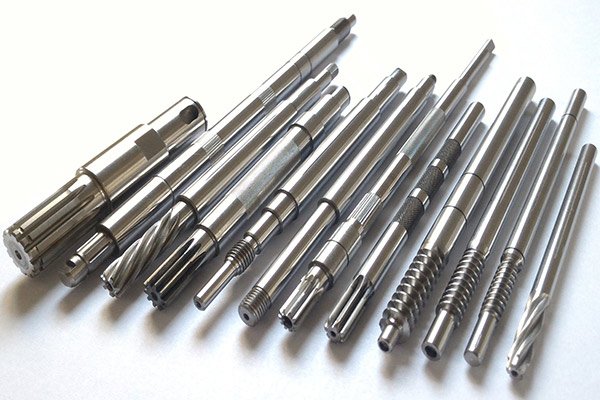
For global OEM and Tier 1 sourcing teams, this integrated model can reduce supplier fragmentation. Instead of coordinating multiple narrowly focused vendors, customers can engage a manufacturing partner capable of supporting design refinement, prototyping, pilot production, serial machining, inspection coordination, and supply continuity. Fewer handoffs improve communication speed and make root-cause analysis more effective when requirements change or nonconformities emerge.
Supply-chain resilience should also be designed into the program. Recommended controls include qualified material sources, documented raw-material specifications, realistic safety-stock policies for long-lead titanium grades, clearly defined approved-process routes, capacity planning for high-priority parts, and transparent communication around forecast changes. A supplier should be evaluated not only on unit price, but also on its ability to contain variation, respond to engineering changes, preserve traceability, and maintain delivery performance through market volatility.
Dixin Technology applies this approach across high-precision sectors. Its experience machining demanding materials and functional components supports informed cross-industry process decisions, including work on titanium aerospace components, where geometry control, material discipline, and repeatability are also essential. While medical requirements remain application-specific, the operational rigor developed in complex manufacturing environments strengthens the production foundation for implant and device programs.
Industry Applications
Titanium CNC machining supports a broad range of medical applications. In orthopedics, manufacturers require bone plates, intramedullary components, fixation screws, locking mechanisms, joint-system elements, and patient-specific instrument interfaces. These parts often combine anatomical surfaces with functional threads, bores, slots, and interface features that demand reliable datum control.
Dental implant systems require similarly rigorous execution at a smaller scale. Implant bodies, abutments, scan bodies, prosthetic interfaces, and surgical-guide components can require fine threads, precision tapers, internal drive forms, and consistent surface preparation. Repeatability between lots is essential because system compatibility depends on accurate interfaces across multiple assembled components.
Spinal and trauma systems add requirements for complex contours, constrained geometries, small features, and robust fatigue performance. Surgical instruments and medical-device assemblies may also require titanium components where corrosion resistance, low weight, sterilization compatibility, and nonmagnetic behavior are beneficial. Detailed capability information for these programs is available through Dixin Technology’s medical CNC machining services.
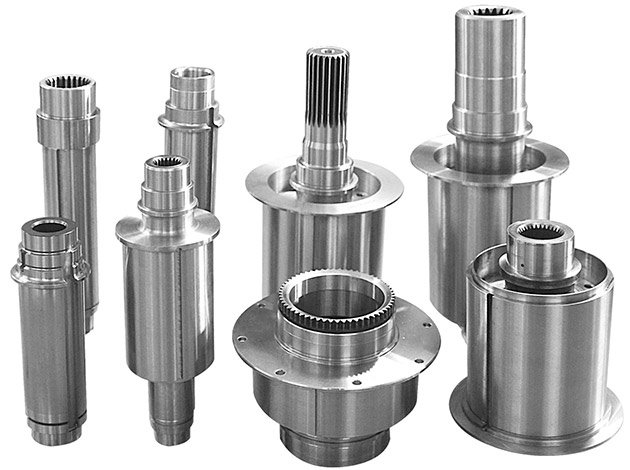
The same supply-chain principles can support related equipment markets. Precision valves, pump bodies, spools, sleeves, and fluid-management components used in medical, laboratory, and industrial systems require disciplined control of internal passages, sealing surfaces, and mating dimensions. Dixin Technology’s experience with hydraulic and pump parts provides relevant process knowledge for customers seeking high-precision fluid-control manufacturing in adjacent applications.
Across these industries, successful sourcing depends on aligning the component’s functional requirements with a manufacturing plan that is technically sound, commercially sustainable, and scalable. Titanium implant programs are strongest when engineering, quality, procurement, and supplier operations share the same definition of critical features, documentation expectations, and delivery priorities.
Call to Action
For OEMs and Tier 1 suppliers developing or sourcing titanium implants, the right machining partner should provide more than capacity. It should provide process engineering, controlled execution, traceable supply, responsive communication, and a scalable route from prototype to production. Dixin Technology combines ODM thinking with precision manufacturing capability to support complex medical-component requirements and global supply-chain expectations.
Contact the Dixin Technology team through the IndustryApex CNC contact page to discuss titanium implant drawings, material requirements, target volumes, quality documentation, and manufacturing feasibility. Early technical engagement can improve manufacturability, shorten qualification cycles, and establish a more reliable foundation for long-term supply.