
- Shaft
- Molds&Tools
- Hydraulics And Pump
- Hair transplant needle
- Hydraulics And Pump
- Precision CNC Shaft Machining Manufacturer for High Performance Applications
- Energy Industry CNC Machining Parts Supplier
- Aerospace Structural Components for OEM Programs
- Aerospace Structural Components for OEM Programs
- Automotive & EV CNC Machining Parts Supplier for OEM and Tier 1
- Medical Device CNC Machining Services
Centerless Grinding Cost: The Variables Behind a Reliable Quote

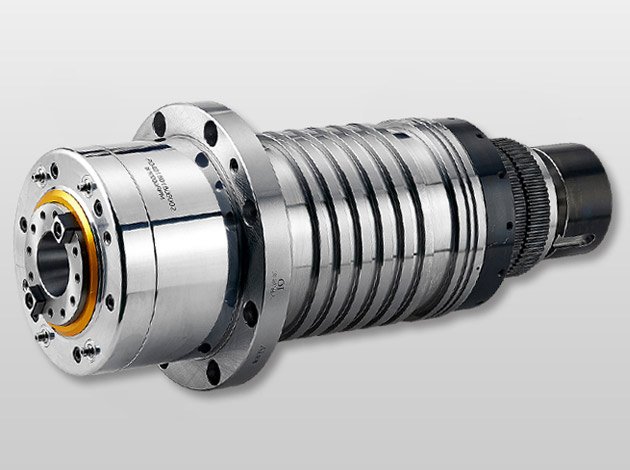
Centerless grinding delivers high-volume cylindrical parts with tight diameter control and excellent surface finish, but the cost of a project varies widely depending on material hardness, tolerance band, batch size, and setup complexity. Understanding these variables helps procurement and engineering teams build realistic budgets, compare supplier quotes, and avoid late-stage surprises when designs move from prototype to production.
Key answer: Centerless grinding cost is shaped by four primary drivers: material machinability and wheel wear rate, dimensional tolerance and roundness requirements, production volume and setup amortization, and surface finish specifications. Secondary factors include part geometry, inspection protocol, and whether through-feed or in-feed methods are required. Quotations are most accurate when drawings include complete tolerance callouts, material certification requirements, and expected annual volume.
What Drives Centerless Grinding Cost
Unlike conventional grinding where parts are mounted between centers or in a chuck, centerless grinding supports the workpiece on a blade between a grinding wheel and a regulating wheel. This method enables continuous feeding and rapid cycle times, making it economical for high volumes—but setup, tooling, and per-pass removal rates still depend on the part’s design and specification.
Material Type and Hardness
Harder materials such as bearing steels, tool steels, and ceramics wear grinding wheels faster, increasing abrasive consumption and dressing frequency. Stainless steels and high-temperature alloys also generate more heat, requiring slower feed rates and careful coolant management. Softer materials like aluminum or brass allow faster throughput but may demand finer wheel selection to avoid loading. Material choice directly affects cycle time and consumable cost per piece.
Dimensional Tolerance and Roundness
Tighter diameter tolerances—such as ±0.005 mm or better—require additional grinding passes, in-process measurement, and wheel conditioning. Centerless grinding tolerances for roundness and cylindricity often drive the choice between through-feed and in-feed configurations, with in-feed setups adding cycle time but improving geometric control. Parts that combine tight diameter bands with strict roundness specifications demand higher machine capability and longer setup validation, both of which increase unit cost at lower volumes.
Production Volume and Setup Amortization
Setup includes blade adjustment, wheel dressing, and first-article inspection. For prototype or low-volume runs, setup time may exceed grinding time, making per-piece cost high. High-volume orders spread setup across thousands of parts, reducing unit cost significantly. CNC centerless grinders with programmable dressing and automatic loading further lower labor content in mass production, but the capital investment requires volume to justify. Buyers should separate NRE (non-recurring engineering) and tooling costs from piece price when comparing quotes for different order quantities.
Surface Finish Requirements
Surface finish targets—expressed as Ra or Rz—affect grinding parameters, wheel grit selection, and the number of finishing passes. A finish of Ra 0.4 µm is achievable in a single setup, while Ra 0.1 µm or finer may require spark-out passes or sequential wheel changes. Cosmetic requirements, such as absence of chatter marks or burn, also extend cycle time. Specifying only the functional finish required avoids unnecessary cost.
Part Geometry and Length-to-Diameter Ratio
Short, stubby parts with low length-to-diameter ratios grind easily and maintain roundness. Long, slender shafts are prone to deflection and chatter, requiring work-rest blades, slower feeds, or multiple setups. Features such as tapers, steps, or interrupted surfaces may prevent through-feed grinding entirely, necessitating in-feed or plunge cycles that add time. Designers should consult with the grinding shop early when geometry deviates from simple cylinders.
Secondary Cost Factors
Inspection and Documentation
Standard inspection includes diameter measurement with micrometers or bore gauges. More rigorous requirements—such as high precision bore grinding tolerances, SPC charting, or coordinate measuring machine (CMM) reports—add inspection labor and traceability overhead. Medical and aerospace applications often mandate material certifications, first-article inspection reports (FAIR), and serialization, all of which increase administrative cost and lead time.
Blank Preparation and Pre-Grinding Operations
Centerless grinding assumes the incoming blank is reasonably round and free of large scale or heavy stock. If the raw material requires heavy roughing, turning, or heat treatment before grinding, those upstream operations must be factored into total part cost. Integrated suppliers who handle the full process chain may offer better pricing and shorter lead times than a standalone grinding subcontractor.
Tooling and Wheel Specification
Grinding wheels are consumables, and their cost per part depends on material, abrasive type (aluminum oxide, silicon carbide, CBN, diamond), bond system, and dressing interval. Specialty wheels for ceramics or carbides carry higher unit cost but enable the process. Wheel truing and dressing tooling, including diamond rolls, also represent capital and maintenance expense that suppliers amortize across jobs.

How to Prepare for an Accurate Quotation
Suppliers need complete information to quote confidently. Incomplete or ambiguous drawings lead to conservative estimates, qualification questions, or post-award scope changes. The checklist below outlines the minimum data set for a reliable grinding cost estimate.
Quotation Readiness Checklist
- 2D drawing with full GD&T or ISO tolerance notation, including diameter, roundness, cylindricity, and surface finish
- Material specification with hardness range or heat treatment state
- Annual volume forecast and preferred order frequency
- Inspection and documentation level required (standard, FAIR, CMM, material certs)
- Blank condition: as-rolled, as-turned, pre-hardened, or finish-ready
- Delivery timeline and whether prototypes are needed before production release
When designs are still in development, suppliers appreciate range-based questions: “What is the cost difference between Ra 0.4 and Ra 0.2?” or “How does volume affect price between 1,000 and 10,000 pieces annually?” These conversations help engineering and sourcing teams set realistic targets before locking specifications.
Comparing Quotes and Evaluating Trade-Offs
Not all quotes are structured the same way. Some suppliers separate setup (NRE) from unit price, while others blend both into a per-piece rate that varies by quantity. The table below shows common cost structures and what to compare.
| Quote Structure | What It Includes | Best For |
|---|---|---|
| NRE + Unit Price | Separate one-time setup and tooling cost, plus per-piece rate | High-volume orders or repeat releases |
| Blended Per-Piece Rate | Setup amortized into unit price at stated quantity | One-time or low-volume buys |
| Tiered Pricing | Unit price decreases at volume breakpoints | Flexible demand or phased rollout |
When evaluating quotes, normalize to the same quantity and include freight, packaging, and inspection costs. A lower unit price may come with longer lead times, minimal documentation, or limited engineering support. CNC machining capabilities that integrate turning, grinding, and inspection under one roof often deliver better total cost and shorter supply chains than multi-vendor approaches.
Trade-Offs Between Cost, Speed, and Precision
Tightening tolerances or improving surface finish always increases cost, but the relationship is not linear. Moving from ±0.02 mm to ±0.01 mm may add 10–15 percent to unit cost, while pushing to ±0.005 mm can double cycle time and require premium machine capability. Designers should tolerance only the features that affect function or assembly, leaving non-critical dimensions with wider bands.
Material substitution can also shift the cost curve. Switching from a difficult-to-grind alloy to a more machinable grade may reduce grinding cost enough to offset a higher material price. Early engagement with manufacturing engineering—before drawings are released—uncovers these opportunities.
Frequently Asked Questions
What is the typical cost difference between through-feed and in-feed centerless grinding?
Through-feed grinding is faster and more economical for simple cylindrical parts in high volume, as the workpiece passes continuously between the wheels. In-feed grinding, where the part is plunged radially into the wheel, adds cycle time but enables tighter geometric control and can handle features like shoulders or tapers. In-feed setups typically cost 20–40 percent more per piece at equivalent volumes, but the gap narrows as tolerances tighten or geometry complexity increases.
How does batch size affect centerless grinding cost?
Setup time—including blade positioning, wheel dressing, and first-article validation—is fixed per job regardless of quantity. For a 50-piece prototype, setup may represent half the total labor cost. At 5,000 pieces, setup becomes negligible per unit. Suppliers often quote tiered pricing with breakpoints at 100, 500, 1,000, and 5,000 pieces to reflect this amortization. Annual blanket orders with scheduled releases also reduce setup frequency and improve unit pricing.
Can centerless grinding be cost-effective for low volumes?
Yes, when the part’s geometry and tolerance suit the process and when alternative methods—such as manual cylindrical grinding or hard turning—would be slower or less capable. CNC centerless grinders with quick-change tooling and programmable cycles have reduced setup time, making runs as small as 25–100 pieces economically viable. However, for true prototypes or one-offs, cylindrical grinding or turning may offer faster turnaround at lower total cost.
What documentation adds the most cost to a centerless grinding quote?
Material certifications, full first-article inspection reports (FAIR/AS9102), and CMM-based dimensional reports add the most incremental cost, typically 10–30 percent depending on complexity. Standard inspection—using micrometers and surface roughness testers—is usually included in the base price. Serialization, SPC charting, and traceability to specific wheel lots are common in aerospace and medical parts and require ERP integration and quality system overhead.
How do I know if my tolerance callouts are realistic for centerless grinding?
Compare your requirements to published process capability data or consult resources like surface grinding tolerances for related processes. Diameter tolerances of ±0.01 mm, roundness under 0.005 mm, and surface finishes of Ra 0.4 µm are routine for centerless grinding. Tighter specs are achievable but drive cost and may require process validation. Suppliers appreciate early tolerance reviews before drawings are locked, as small adjustments can unlock significant savings without compromising function.
Should I request quotes from grinding specialists or full-service machine shops?
Both have advantages. Grinding specialists often have deeper process knowledge, more machine capacity, and optimized tooling for high-volume cylindrical work. Full-service shops—especially those offering precision shaft machining and integrated turning, milling, and grinding—simplify supply chain management, reduce freight and lead time, and provide single-source accountability. For complex parts requiring multiple operations, integrated suppliers typically deliver better total cost and quality.
Conclusion
Centerless grinding cost reflects a balance between material properties, tolerance requirements, production volume, and the supplier’s process capability. Accurate quotations depend on complete drawings, realistic tolerance bands, and clear communication about volume and inspection needs. By understanding how these variables interact—and by engaging manufacturing partners early in the design cycle—procurement and engineering teams can secure competitive pricing, avoid costly re-work, and build supply chains that scale from prototype to mass production. For projects requiring tight diameter control, excellent surface finish, and stable batch consistency, upload your drawings to receive a detailed, data-driven quotation within 24 hours.